Sunday, November 05, 2017

Wig (2017, in press)-Segregated Systems of Human Brain Networks


Click on images to enlarge.

Article link.

This is an excellent and thought provoking brain network review that addresses the push-pull between optimal (and necessary) brain network segregation and more transient and fluid integration “on demand” to meet new task demands. Excellent summary.


ABSTRACT

The organization of the brain network enables its function. Evaluation of this
organization has revealed that large-scale brain networks consist of multiple segregated subnetworks of interacting brain areas. Descriptions of resting state network architecture have provided clues for understanding the functional significance of these segregated subnetworks, many of which corre-
spond to distinct brain systems. The present report synthesizes accumulating evidence to reveal how maintaining segregated brain systems renders the human brain network functionally specialized, adaptable to task demands, and largely resilient following focal brain damage. The organizational properties that support system segregation are harmonious with the properties that promote integration across the network, but confer unique and importantfeatures to the brain network that are central to its function and behavior.

- Posted using BlogPress from my iPad

Saturday, November 04, 2017

Mathematical (Gq) giftedness: Review of cognitive, conative and neural variables

Click on image to enlarge.

Article link.


ABSTRACT

Most mathematical cognition research has focused on understanding normal adult function and child development as well as mildly and moderately impaired mathematical skill, often labeled developmental dyscalculia and/or mathematical learning disability. In contrast, much less research is available on cognitive and neural correlates of gifted/excellent mathematical knowledge in adults and children. In order to facilitate further inquiry into this area, here we review 40 available studies, which examine the cognitive and neural basis of gifted mathematics. Studies associated a large number of cognitive factors with gifted mathematics, with spatial processing and working memory being the most frequently identified contributors. However, the current literature suffers
from low statistical power, which most probably contributes to variability across findings. Other major shortcomings include failing to establish domain and stimulus specificity of findings, suggesting causation without sufficient evidence and the frequent use of invalid backward inference in neuro-imaging studies. Future studies must increase statistical power and neuro-imaging studies must rely on supporting behavioral data when interpreting findings. Studies should investigate the factors shown to correlate with math giftedness in a more specific manner and determine exactly how individual factors may contribute to gifted math ability.


SELECTIVE SUMMARY CONCLUSION STATEMENTS

In line with the heterogeneous nature of mathematical disabilities (e.g., Rubinsten and Henik, 2009; Fias et al., 2013), mathematical giftedness also seems to correlate with numerous factors—(see Appendix A for which factors were found in each study). These factors roughly fall into social, motivational, and cognitive domains. Specifically, in the social and motivational domains, motivation, high drive, and interest to learn mathematics, practice time, lack of involvement in social interpersonal, or religious issues, authoritarian attitudes, and high socio-economic status have all been related to high levels of mathematical achievement. Speculatively, it is interesting to ask whether some of these factors may be related to the so-called Spontaneous Focusing on Numerosity (SFON) concept which appears early in life and means that some children have a high tendency to pay attention to numerical information (Hannula and Lehtinen, 2005). To clarify this question, longitudinal studies could investigate whether high SFON at an early age is associated with high levels of mathematical expertise in later life. Better assessment of individual variability is also important, for example, Albert Einstein (who was a gifted even if sometimes “lazy” mathematician; see e.g., Isaacson, 2008) was famously anti-authoritarian.

In terms of cognitive variables, we found that spatial processing, working memory, motivation/practice time, reasoning, general IQ, speed of information processing, short-term memory, efficient switching from working memory to episodic memory, pattern recognition, inhibition, fluid intelligence, associative memory, and motor functions were all associated with mathematical giftedness. As a caveat it is important to point out that mere “significance counting” (i.e., just considering studies with statistical significant results regarding a concept) can be very misleading especially in the typically underpowered context of psychology and neuro-imaging research (see e.g., Szucs and Ioannidis, 2017). However, considering the patchy research, this is the best we can do at the moment. In addition, even if meta-analyses were possible, these also typically only take into account published research, so they usually (highly) overestimate effect sizes especially from small scale studies (see Szucs and Ioannidis, 2017).


- Posted using BlogPress from my iPad

Friday, November 03, 2017

The landscape of brain health innovation: 130 experts and pioneers in 18 countries (and counting)


----
The landscape of brain health innovation: 130 experts and pioneers in 18 countries (and counting)
// SharpBrains

— Registrants for the 2017 SharpBrains Virtual Summit (December 5-7th) as of November 3rd, 2017

Just a quick update on how registration stands for the upcoming 2017 SharpBrains Virtual Summit: Brain Health & Enhancement in the Digital Age (December 5-7th).

We are proud to report that so far 130 experts, pioneers and practitioners are registered to participate.

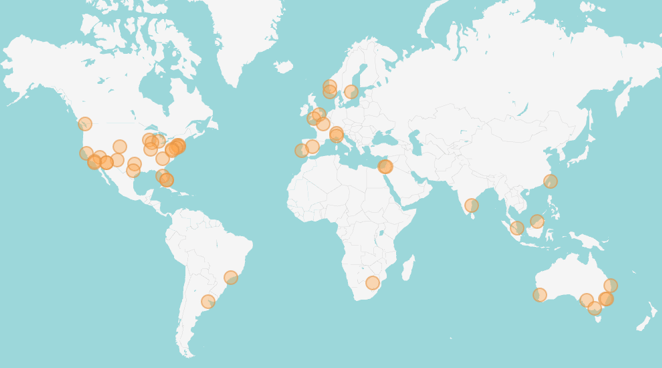
95 seem to be based in the US and 35 abroad, based on IP address during registration, with the following country breakdown:

  • United States 95
  • Australia 7
  • Canada 6
  • United Kingdom 4
  • Israel 3
  • Norway 2
  • Italy 2
  • Taiwan 1
  • Singapore 1
  • India 1
  • France 1
  • Sweden 1
  • Spain 1
  • Portugal 1
  • Brazil 1
  • Argentina 1
  • South Africa 1
  • Brunei 1

__________

Please consider joining us to explore the latest brain science and tech and market trends and to help shape Brain Health & Enhancement in the Digital Age.

For context, organizations represented in past Summits include: AARP, Alegent Health Immanuel Medical Center, Allstate Insurance, Alzheimer's Association, BBC, Bon Secours New York Health System, Brain Injury Association of America, Campbell Soup Company, Greenville Hospital System, Harvard Business Review, HealthComm Inc., Human Dimension Taskforce, US Army, Institute For The Future, Intel, Johnson & Johnson, Los Angeles County Dept of Public Health, McGovern Institute of Neurotechnology, MIT, National Resource Ctr. Osher Lifelong Learning Institutes, Nutrition Science Solutions, One Laptop Per Child, OptumHealth Behavioral Solutions, Piedmont Gardens, PsychologyToday, Procter & Gamble, Robert Wood Johnson Foundation, Stanford University, Sun Microsystems, UC Berkeley, UnitedHealth Group, Winter Park Health Foundation, Workers' Compensation Regulatory Authority, UCSF.

And the backgrounds of previous participants include: Biomedical Engineers, CEOs, Digital Media professionals, Entrepreneurs, Game publishers, Healthcare technologists, Marketing Executives, Medical Students, Neurologists, Neuropsychologists, Non profit board members, Occupational Therapists, Pharmaceutical Executives, Post doctorate researchers, Professors and Researchers, Psychiatrists, Psychologists, Psychotherapists, Scientific Publishers, Social Workers, Speech Pathologists, Talent management/HR, and Wellness professionals.

Looking forward to a great conference!

__________

Learn more & Reserve your Spot HERE

(10%-off promo code for SharpBrains readers: sharp2017)


----

Read in my feedly


Thursday, November 02, 2017

How to detect the risk of dyslexia before learning to read - Scienmag: Latest Science and Health News


How to detect the risk of dyslexia before learning to read - Scienmag: Latest Science and Health News

Almost 10% of the world population suffers dyslexia. Establishing an early diagnosis would allow…

Read it on Flipboard

Read it on scienmag.com


Sunday, October 29, 2017

Is “g” overemphasized in intelligence research—commentary by Stankov

Commentary: Overemphasized “g”

Lazar Stankov

Abstract: In this paper I argue that the emphasis on “g” has become a hindrance to the study of broadly defined human cognitive abilities. Abilities captured by the first- and second-stratum factors in the Cattel-Horn-Carroll (CHC) theory have been neglected. The focus has been on a narrow range of cognitive processes that excludes those common to some sensory modalities and a host of new tasks and constructs that have become available through recent conceptual analyses and technological developments. These new areas have emerged from psychology itself (complex problem solving tasks and emotional intelligence) and from disciplines related to psychology like education and economics (economic games and cognitive biases in decision-making).

Click image to enlarge. Article link.


- Posted using BlogPress from my iPad

Meta-analysis supports cognitive ability differentiation hypotheses (SLODOR)

A B S T R A C T

The cognitive ability differentiation hypothesis, which is also termed Spearman's Law of Diminishing Returns, proposes that cognitive ability tests are less correlated and less g loaded in higher ability populations. In ad-dition, the age differentiation hypothesis proposes that the structure of cognitive ability varies across respondent age. To clarify the literature regarding these expectations, 106 articles containing 408 studies, which were published over a 100-year time span, were analyzed to evaluate the empirical basis for ability as well as age differentiation hypotheses. Meta-analyses provide support for both hypotheses and related expectations. Results demonstrate that the mean correlation and g loadings of cognitive ability tests decrease with increasing ability, yet increase with respondent age. Moreover, these effects have been nearly constant throughout the century of analyzed data. These results are important because we cannot assume an invariant cognitive structure for dif-ferent ability and age levels. Implications for practice as well as drawbacks are further discussed.

Article link.


Saturday, October 28, 2017

Concept maps effective instructional method: A meta-analysis

Click on images to enlarge.  Article link.


Abstract

A concept map is a node-link diagram in which each node represents a concept and each link identifies the relationship between the two concepts it connects. We investigated how using concept maps influences learning by synthesizing the results of 142 independent effect sizes (n = 11,814). A random-effects model meta-analysis revealed that learning with concept and knowledge maps produced a moderate, statistically significant effect (g = 0.58, p < 0.001). A moderator analysis revealed that creating concept maps (g = 0.72, p < 0.001) was associated with greater benefit relative to respective comparison conditions than studying concept maps (g = 0.43, p < 0.001). Additional moderator analyses indicated learning with concept maps was superior to other instructional comparison conditions, and was effective across science, technology, engineering, and math (STEM) and non-STEM knowledge domains. Further moderator analyses, as well as implications for theory and practice, are provided.

The following text is a direct quote from the conclusion section.

Nesbit and Adesope (2013) proposed seven cognitively oriented hypotheses that could explain the advantages of using concept maps for teaching and learning in comparison with reading text, listening to lectures, participating in discussions, writing summaries, and other instructional activities. First, using concept maps may enable dual coding of information in verbal and visual components of longer-term memory and thereby support more effective retrieval. Second, in comparison with text, they may allow cognitive load to be distributed across the visual and verbal channels of working memory, thus avoiding an overload of verbal working memory. Third, concept maps tend to consolidate multiple references to a concept at a single point in space, while in text, audio or other sequential formats the references would be spread over the sequence. Consolidating all relationships to a concept around a single point, a kind of spatial contiguity, may promote a more semantically integrated understanding of the concept. Fourth, in some types of concept maps, particularly those specified by Novak and Cañas (2008), superordinate and subordinate semantic relationships (e.g., mammal-squirrel) are signaled more strongly than they typically are in text. Fifth, the noun-verb-noun syntax used to express propositions in concept maps is much simpler and more accessible to poor readers and writers than the typical prose of expository text. Sixth, the decisions required to construct a concept map (e.g., determining which nodes should be placed close together) entail greater elaborative or germane processing than the decisions required to construct expository text. Finally, because concept maps take up more space than text, they may demand a greater degree of concision or summarization which in turn prompts greater elaborative processing.


- Posted using BlogPress from my iPad

Friday, October 27, 2017

Table of contents : Nature Neuroscience— issue on Spatial cognition


Table of contents : Nature Neuroscience

From Twitter, a Flipboard magazine by Hugo Spiers

Current issue ISSUE Previous November 2017, Volume 20No11pp1431-1653 Editorial • Obituary • Q&A • Commentary • Perspectives • Reviews • News and Views •…

Read it on Flipboard

Read it on nature.com


Thursday, October 26, 2017

DARPA's new brain device increases learning speed by 40%


DARPA's new brain device increases learning speed by 40%

Cheap and Non-Invasive New research funded by the U.S. Department of Defense's Defense Advanced Research Project Agency (DARPA) has…

Read it on Flipboard

Read it on futurism.com


******************************************************
Kevin McGrew, PhD
Educational Psychologist
Director, Institute for Applied Psychometrics
IAP
******************************************************

Musicians have better memory than nonmusicians: A meta-analysis

More research, this time a meta-analysis, documenting the cognitive benefits of musical training. I better not show this to my mother who never liked the fact that I only took one year of piano:)

Musicians have better memory than nonmusicians: A meta-analysis

Francesca Talamini, Gianmarco Altoè, Barbara Carretti, Massimo Grassi

Abstract

The three meta-analyses revealed a small effect size for long-term memory, and a medium effect size for short-term and working memory, suggesting that musicians perform better than nonmusicians in memory tasks. Moreover, the effect of the moderator suggested that, the type of stimuli influences this advantage.

Click on image to enlarge. Article link.


- Posted using BlogPress from my iPad

Topics in Cognitive Science - Volume 9, Issue 4 - Sketching and Cognition: Edited by Kenneth D. Forbus and Shaaron Ainsworth


Topics in Cognitive Science - Volume 9, Issue 4 - Sketching and Cognition: Edited by Kenneth D. Forbus and Shaaron Ainsworth

You have free access to this content Kenneth D. Forbus and Shaaron…

Read it on Flipboard

Read it on onlinelibrary.wiley.com


Wednesday, October 25, 2017

CFA of WISC-V: A five factor CHC battery

There are dueling factor study articles regarding the WISC-V in the research literature. Here is the take of Reynolds and Keith, who, IMHO, tend to do some of the best factor structure research in intelligence testing.

The five factors look like clear Gc, Gv, Gf, Gwm and Gs CHC factors.

Abstract

The purpose of this research was to test the consistency in measurement of Wechsler Intelligence Scale for Chil-dren-Fifth Edition (WISC-V; Wechsler, 2014) constructs across the 6 through 16 age span and to understand the constructs measured by the WISC-V. First-order, higher-order, and bifactor confirmatory factor models were used. Results were compared with two recent studies using higher-order and bifactor exploratory factor analysis (Canivez, Watkins, & Dombrowski, 2015; Dombrowski, Canivez, Watkins, & Beaujean, 2015) and two using con-firmatory factor analysis (Canivez, Watkins, & Dombrowski, 2016; Chen, Zhang, Raiford, Zhu, & Weiss, 2015). We found evidence of age-invariance for the constructs measured by the WISC-V. Further, both g and five distinct broad abilities (Verbal Comprehension, Visual Spatial Ability, Fluid Reasoning, Working Memory, and Processing Speed) were needed to explain the covariances among WISC-V subtests, although Fluid Reasoning was nearly equivalent to g. These findings were consistent whether a higher-order or a bifactor hierarchical model was used, but they were somewhat inconsistent with factor analyses from the prior studies. We found a correlation between Fluid Reasoning and Visual Spatial factors beyond a general factor (g) and that Arithmetic was primarily a direct indicator of g. Composite scores from the WISC-V correlated well with their corresponding underlying factors. For those concerned about the fewer numbers of subtests in the Full Scale IQ, the model implied relation between g and the FSIQ was very strong.

Click on images to enlarge.  Article link.


- Posted using BlogPress from my iPad

More support for P-FIT model of intelligence

Abstract

The authors describe the brain regions involved in the process of intelligence using as a basis, the models of the theory of frontoparietal integration (P-FIT Model). They also correlate the model described with functional areas of Brodmann, integrating them into the tertiary brain areas and address the subcortical structures involved in cognitive processes, including the memory. The studies performed by functional magnetic resonance, also unmask various regions related with intelligence, neither previously described by Brodmann nor even in conventional models of learning. The anterior insular cortex presents itself as the most recent tertiary area to be considered. Subcortical structures, when injured, mimick injuries to the cerebral cortex, demonstrating their great participation in cognition. The topographies of aphasia and the functioning mechanisms of the bearers of learning disorders, including dyslexic, dysgraphia and dyscalculic should be reconsidered. A better understanding of this topographic anatomy may clarify the mechanisms used in those individuals with cerebral lesions.

Click on images to enlarge.  Article link.


- Posted using BlogPress from my iPad

An Analysis of the CHC model for Comparing Cognitive Architectures

From the computer science literature

An Analysis of the CHC model for Comparing Cognitive Architectures


Abstract There are many cognitive architectures available nowadays, and each architecture has its own different mechanisms. Therefore, we need to identify the advantages and disadvantages of these architectures in order to improve upon them. In this paper, we propose new metrics for comparing cognitive architectures based on the Cattell-Horn-Carroll (CHC) model, which is used in psychology to explain factors of intelligence. Here, we analyze factors of intelligence in the CHC model and interpret them as elements of a new cognitive architecture. Then, the CHC model is investigated with respect to “data” and “processing” to obtain a metric for each component. We present examples using Soar and LIDA to illustrate comparing different cognitive architectures and demonstrate the effectiveness of our approach.

Click on images to enlarge


- Posted using BlogPress from my iPad
Monday, October 23, 2017

The Evolution of the Cattell-Horn-Carroll (CHC) Theory of Intelligence: Schneider & McGrew 2018 summary


The Evolution of the Cattell-Horn-Carroll (CHC) Theory of Intelligence: Schneider & McGrew 2018 summary from Kevin McGrew

This presentation includes a portion of key material to be published in a forthcoming CHC update/revision chapter--In D. P. Flanagan & Erin M .McDonough (Eds.), Contemporary intellectual assessment: Theories, tests and issues (4thed.,) New York: Guilford Press.

This is only a small amount of the chapter. Also, I have inserted some new material related to test interpretation that is not included in the to-be-published chapter. The tentative date for publication of the Flanagan book is spring 2018. The majority, but not all, of this SlideShare presentation was originally presented at the 2017 NYASP conference October 19,2017.

Sunday, October 22, 2017

Elsevier Neuroscience Books Win BMA Book Awards | SciTech Connect


Elsevier Neuroscience Books Win BMA Book Awards | SciTech Connect

We are proud to announce that several Elsevier neuroscience books were honored at the British Medical Association (BMA) annual 2017…

Read it on Flipboard

Read it on scitechconnect.elsevier.com


Tuesday, October 17, 2017

PsycTESTS


PsycTESTS

Database Type Bibliographic, plus full text and multimedia. (76% of test records contain the actual test or test items.) Record Types Descriptive summaries of the test and its development…

Read it on Flipboard

Read it on apa.org


Sunday, October 15, 2017

What Is Your Mental Lexicon?


What Is Your Mental Lexicon?

From Psychology, a Flipboard magazine by Birgit

"The fact that a speaker can mentally find the word that he/she wants in less than 200 milliseconds, and in certain cases, even before it is heard, is proof that the…

Read it on Flipboard

Read it on thoughtco.com


Monday, October 09, 2017

Predicting when a sound will occur relies on the brain's motor system - Scienmag: Latest Science and Health News


Predicting when a sound will occur relies on the brain's motor system - Scienmag: Latest Science and Health News

Whether it is dancing or just tapping one foot to the beat, we all experience how…

Read it on Flipboard

Read it on scienmag.com