Monday, July 15, 2013

In Defense of Intelligent Testing [feedly]


Shared via feedly // published on Scientific American - Mind & Brain // visit site
In Defense of Intelligent Testing
I recently published a book called Ungifted: Intelligence Redefined . With a title like that, you'd think the book is one big anti-IQ, anti-testing manifesto. It isn't. While the IQ test certainly...

-- Read more on ScientificAmerican.com

Article: 60 Apps for Teaching STEM


Article: Early Spatial Reasoning Predicts Later Creativity and Innovation, Especially in STEM Fields


Sunday, July 14, 2013

Article: Talking ABC... app review: teach kids about the alphabet


Talking ABC... app review: teach kids about the alphabet
http://www.apppicker.com/reviews/8187/Talking-ABC-app-review-teach-kids-about-the-alphabet

Shared from Apps on Flipboard. Download Flipboard for free here.


Article: Crayon Piano: A Piano Based Rhythm and Beat Music app geared toward children


Crayon Piano: A Piano Based Rhythm and Beat Music app geared toward children
http://appchronicles.com/crayon-piano-a-piano-based-rhythm-and-beat-music-app-geared-toward-children/

Shared from Apps on Flipboard. Download Flipboard for free here.

Article: Two Passionate Paths to Performance

More Beyond IQ stuff


SLODOR and national IQ

Click on image to enlarge


- Posted using BlogPress from my iPad

The Flynn effect, g, and ability differentiation


Another FE article to be added to the Flynn Effect Archive Project On next update

Click on image to enlarge


- Posted using BlogPress from my iPad

Saturday, July 13, 2013

IQs Corner Recent Lit of Interest: 7-13-13


Two weeks worth of hand culled references with abstracts here. Enjoy


- Posted using BlogPress from my iPad

Thursday, July 11, 2013

Knowledge Alert - JOURNAL OF EXPERIMENTAL CHILD PSYCHOLOGY

> Web of Knowledge Table of Contents Alert
>
> Journal Name: JOURNAL OF EXPERIMENTAL CHILD PSYCHOLOGY (ISSN: 0022-0965)
> Issue: Vol. 115 No. 2, 2013
> IDS#: 160CC
> Alert Expires: 10 JAN 2014
> Number of Articles in Issue: 10 (10 included in this e-mail)
> Organization ID: c4f3d919329a46768459d3e35b8102e6
> ========================================================================
> Note: Instructions on how to purchase the full text of an article and Thomson Reuters Science Contact information are at the end of the e-mail.
> ========================================================================
>
>
> *Pages: 227-244 (Article)
> *View Full Record: http://gateway.webofknowledge.com/gateway/Gateway.cgi?GWVersion=2&SrcAuth=Alerting&SrcApp=Alerting&DestApp=CCC&DestLinkType=FullRecord;KeyUT=CCC:000320093000001
> *Order Full Text [ ]
>
> Title:
> The language of mathematics: Investigating the ways language counts for children's mathematical development
>
> Authors:
> Vukovic, RK; Lesaux, NK
>
> Source:
> *JOURNAL OF EXPERIMENTAL CHILD PSYCHOLOGY*, 115 (2):227-244; JUN 2013
>
> Abstract:
> This longitudinal study examined how language ability relates to
> mathematical development in a linguistically and ethnically diverse
> sample of children from 6 to 9 years of age. Study participants were 75
> native English speakers and 92 language minority learners followed from
> first to fourth grades. Autoregression in a structural equation modeling
> (SEM) framework was used to evaluate the relation between children's
> language ability and gains in different domains of mathematical
> cognition (i.e., arithmetic, data analysis/probability, algebra, and
> geometry). The results showed that language ability predicts gains in
> data analysis/probability and geometry, but not in arithmetic or
> algebra, after controlling for visual-spatial working memory, reading
> ability, and sex. The effect of language on gains in mathematical
> cognition did not differ between language minority learners and native
> English speakers. These findings suggest that language influences how
> children make meaning of mathematics but is not involved in complex
> arithmetical procedures whether presented with Arabic symbols as in
> arithmetic or with abstract symbols as in algebraic reasoning. The
> findings further indicate that early language experiences are important
> for later mathematical development regardless of language background,
> denoting the need for intensive and targeted language opportunities for
> language minority and native English learners to develop mathematical
> concepts and representations. (C) 2013 Published by Elsevier Inc.
>
> ========================================================================
>
>
> *Pages: 245-261 (Article)
> *View Full Record: http://gateway.webofknowledge.com/gateway/Gateway.cgi?GWVersion=2&SrcAuth=Alerting&SrcApp=Alerting&DestApp=CCC&DestLinkType=FullRecord;KeyUT=CCC:000320093000002
> *Order Full Text [ ]
>
> Title:
> Intraindividual differences in executive functions during childhood: The role of emotions
>
> Authors:
> Pnevmatikos, D; Trikkaliotis, I
>
> Source:
> *JOURNAL OF EXPERIMENTAL CHILD PSYCHOLOGY*, 115 (2):245-261; JUN 2013
>
> Abstract:
> Intraindividual differences in executive functions (EFs) have been
> rarely investigated. In this study, we addressed the question of whether
> the emotional fluctuations that schoolchildren experience in their
> classroom settings could generate substantial intraindividual
> differences in their EFs and, more specifically, in the fundamental
> unifying component of EFs, their inhibition function. We designed an
> experimental research with ecological validity within the school setting
> where schoolchildren of three age groups (8-, 10-, and 12-year-olds)
> were involved. We executed three experiments. In Experiment 1, using a
> between-participants design, we isolated a classroom episode that,
> compared with the other episodes, generated significant differences in
> inhibitory function in a consequent Go/NoGo task. This was an episode
> that induced frustration after the experience of anxiety due to the
> uncertainty. Experiment 2, using a within-participants design, confirmed
> both the induced emotions from the episode and the intraindividual
> variability in schoolchildren's inhibition accuracy in the consequent
> Go/NoGo task. Experiment 3, again using a within-participants design,
> examined whether the same episode could generate intraindividual
> differences in a more demanding inhibition task, namely the anti-saccade
> task. The experiment confirmed the previous evidence; the episode
> generated high variability that in some age groups accounted for more
> than 1.5 standard deviations from the interindividual variability
> between the schoolchildren of the same age. Results showed that,
> regardless of their sex and the developmental progression in their
> inhibition with age, the variability induced within participants from
> the experienced frustration was very high compared with the
> interindividual variability of the same age group. (C) 2013 Elsevier
> Inc. All rights reserved.
>
> ========================================================================
>
>
> *Pages: 262-272 (Article)
> *View Full Record: http://gateway.webofknowledge.com/gateway/Gateway.cgi?GWVersion=2&SrcAuth=Alerting&SrcApp=Alerting&DestApp=CCC&DestLinkType=FullRecord;KeyUT=CCC:000320093000003
> *Order Full Text [ ]
>
> Title:
> Rotary motion impairs attention to color change in 4-month-old infants
>
> Authors:
> Kavsek, M
>
> Source:
> *JOURNAL OF EXPERIMENTAL CHILD PSYCHOLOGY*, 115 (2):262-272; JUN 2013
>
> Abstract:
> Continuous color changes of an array of elements appear to stop changing
> if the array undergoes a coherent motion. This silencing illusion was
> demonstrated for adults by Suchow and Alvarez (Current Biology, 2011,
> vol. 21, pp. 140-143). The current forced-choice preferential looking
> study examined 4-month-old infants' sensitivity to the silencing
> illusion. Two experimental conditions were conducted. In the dynamic
> condition, infants were tested with two rotating rings of circular
> different-colored dots. In one of these rings the dots continuously
> changed color, whereas in the other ring the dots did not change color.
> In the static condition, the global rotary motion was eliminated from
> the targets. Infants preferred looking at the color-changing target in
> the static condition but not in the dynamic condition; they attended to
> the color changes in the static condition but failed to detect them in
> the dynamic condition. This differential looking pattern is consistent
> with the hypothesis that the silencing illusion can be established
> during early infancy. A control group of adults also responded to the
> silencing phenomenon. This substantiates that the stimuli generate a
> robust illusory effect. (C) 2013 Elsevier Inc. All rights reserved.
>
> ========================================================================
>
>
> *Pages: 273-296 (Article)
> *View Full Record: http://gateway.webofknowledge.com/gateway/Gateway.cgi?GWVersion=2&SrcAuth=Alerting&SrcApp=Alerting&DestApp=CCC&DestLinkType=FullRecord;KeyUT=CCC:000320093000004
> *Order Full Text [ ]
>
> Title:
> Young children's fast mapping and generalization of words, facts, and pictograms
>
> Authors:
> Deak, GO; Toney, AJ
>
> Source:
> *JOURNAL OF EXPERIMENTAL CHILD PSYCHOLOGY*, 115 (2):273-296; JUN 2013
>
> Abstract:
> To test general and specific processes of symbol learning, 4- and
> 5-year-old children learned three kinds of abstract associates for novel
> objects: words, facts, and pictograms. To test fast mapping (i.e.,
> one-trial learning) and subsequent learning, comprehension was tested
> after each of four exposures. Production was also tested, as was
> children's tendency to generalize learned items to new objects in the
> same taxon. To test for a bias toward mutually exclusive associations,
> children learned either one-to-one or many-to-many mappings. In
> Experiment 1, children learned words, facts (with or without incidental
> novel words), or pictograms. In Experiment 2, children learned words or
> pictograms. In both of these experiments, children learned words slower
> than facts and pictograms. Pictograms and facts were generalized more
> systematically than words, but only in Experiment 1. Children learned
> one-to-one mappings faster only in Experiment 2, when cognitive load was
> increased. In Experiment 3, 3- and 4-year-olds were taught facts (with
> novel words), words, and pictograms. Children learned facts faster than
> words; however, they remembered all items equally well a week later. The
> results suggest that word learning follows non-specialized memory and
> associative learning processes. (C) 2013 Elsevier Inc. All rights
> reserved.
>
> ========================================================================
>
>
> *Pages: 297-308 (Article)
> *View Full Record: http://gateway.webofknowledge.com/gateway/Gateway.cgi?GWVersion=2&SrcAuth=Alerting&SrcApp=Alerting&DestApp=CCC&DestLinkType=FullRecord;KeyUT=CCC:000320093000005
> *Order Full Text [ ]
>
> Title:
> Categorizing with gender: Does implicit grammatical gender affect semantic processing in 24-month-old toddlers?
>
> Authors:
> Bobb, SC; Mani, N
>
> Source:
> *JOURNAL OF EXPERIMENTAL CHILD PSYCHOLOGY*, 115 (2):297-308; JUN 2013
>
> Abstract:
> The current study investigated the interaction of implicit grammatical
> gender and semantic category knowledge during object identification.
> German-learning toddlers (24-month-olds) were presented with picture
> pairs and heard a noun (without a preceding article) labeling one of the
> pictures. Labels for target and distracter images either matched or
> mismatched in grammatical gender and either matched or mismatched in
> semantic category. When target and distracter overlapped in both
> semantic and gender information, target recognition was impaired
> compared with when target and distracter overlapped on only one
> dimension. Results suggest that by 24 months of age, German-learning
> toddlers are already forming not only semantic but also grammatical
> gender categories and that these sources of information are activated,
> and interact, during object identification. (C) 2013 Elsevier Inc. All
> rights reserved.
>
> ========================================================================
>
>
> *Pages: 309-325 (Article)
> *View Full Record: http://gateway.webofknowledge.com/gateway/Gateway.cgi?GWVersion=2&SrcAuth=Alerting&SrcApp=Alerting&DestApp=CCC&DestLinkType=FullRecord;KeyUT=CCC:000320093000006
> *Order Full Text [ ]
>
> Title:
> Bringing order to life events: Memory for the temporal order of autobiographical events over an extended period in school-aged children and adults
>
> Authors:
> Pathman, T; Doydum, A; Bauer, PJ
>
> Source:
> *JOURNAL OF EXPERIMENTAL CHILD PSYCHOLOGY*, 115 (2):309-325; JUN 2013
>
> Abstract:
> Remembering temporal information associated with personal past events is
> critical. Yet little is known about the development of temporal order
> memory for naturally occurring events. In the current research, 8- to
> 10-year-old children and adults took photographs daily for 4 weeks.
> Later, they participated in a primacy/recency task (were shown 2 of
> their photographs and decided which event occurred first) and an
> ordering task (ordered 12 photographs taken over the 4-week period). All
> participants showed above-chance performance in primacy/recency; adults
> were more accurate than children. For ordering, children and adults
> showed similar patterns and performance was relatively low. This study
> has implications for autobiographical memory theories and suggests that
> ordering accuracy might not be necessary for adult-like autobiographical
> memory. Practical and legal implications of the findings also are
> discussed. (C) 2013 Elsevier Inc. All rights reserved.
>
> ========================================================================
>
>
> *Pages: 326-341 (Article)
> *View Full Record: http://gateway.webofknowledge.com/gateway/Gateway.cgi?GWVersion=2&SrcAuth=Alerting&SrcApp=Alerting&DestApp=CCC&DestLinkType=FullRecord;KeyUT=CCC:000320093000007
> *Order Full Text [ ]
>
> Title:
> Effects of delays on 6-year-old children's self-generation and retention of knowledge through integration
>
> Authors:
> Varga, NL; Bauer, PJ
>
> Source:
> *JOURNAL OF EXPERIMENTAL CHILD PSYCHOLOGY*, 115 (2):326-341; JUN 2013
>
> Abstract:
> The current research was an investigation of the effect of delay on
> self-generation and retention of knowledge derived through integration
> by 6-year-old children. Children were presented with novel facts from
> passages read aloud to them (i.e., "stem" facts) and tested for
> self-generation of new knowledge through integration of the facts. In
> Experiment 1, children integrated the stem facts at Session 1 and
> retained the self-generated memory traces over 1 week. In Experiment 2,
> 1-week delays were imposed either between the to-be-integrated facts
> (between-stem delay) or after the stem facts but before the test
> (before-test delay). Integration performance was diminished in both
> conditions. Moreover, memory for individual stem facts was lower in
> Experiment 2 than in Experiment 1, suggesting that self-generation
> through integration promoted memory for explicitly taught information.
> The results indicate the importance of tests for promoting
> self-generation through integration as well as for retaining newly
> self-generated and explicitly taught information. (C) 2013 Elsevier Inc.
> All rights reserved.
>
> ========================================================================
>
>
> *Pages: 342-355 (Article)
> *View Full Record: http://gateway.webofknowledge.com/gateway/Gateway.cgi?GWVersion=2&SrcAuth=Alerting&SrcApp=Alerting&DestApp=CCC&DestLinkType=FullRecord;KeyUT=CCC:000320093000008
> *Order Full Text [ ]
>
> Title:
> Reevaluating the selectivity of face-processing difficulties in children and adolescents with autism
>
> Authors:
> Ewing, L; Pellicano, E; Rhodes, G
>
> Source:
> *JOURNAL OF EXPERIMENTAL CHILD PSYCHOLOGY*, 115 (2):342-355; JUN 2013
>
> Abstract:
> There are few direct examinations of whether face-processing
> difficulties in autism are disproportionate to difficulties with other
> complex non-face stimuli. Here we examined discrimination ability and
> memory for faces, cars, and inverted faces in children and adolescents
> with and without autism. Results showed that, relative to typical
> children, the difficulties of children and adolescents with autism were
> not limited to, or disproportionately severe for, faces. Rather, these
> participants demonstrated significant difficulties in remembering and
> discriminating between faces and cars. This lack of face selectivity is
> inconsistent with prominent theories that attribute face-processing
> difficulties in autism to fundamental problems with social motivation or
> social attention. Instead, our results are consistent with a more
> pervasive perceptual atypicality that may affect autistic processing of
> non-face stimuli as well as face stimuli. (C) 2013 Elsevier Inc. All
> rights reserved.
>
> ========================================================================
>
>
> *Pages: 356-370 (Article)
> *View Full Record: http://gateway.webofknowledge.com/gateway/Gateway.cgi?GWVersion=2&SrcAuth=Alerting&SrcApp=Alerting&DestApp=CCC&DestLinkType=FullRecord;KeyUT=CCC:000320093000009
> *Order Full Text [ ]
>
> Title:
> Digit reversal in children's writing: A simple theory and its empirical validation
>
> Authors:
> Fischer, JP
>
> Source:
> *JOURNAL OF EXPERIMENTAL CHILD PSYCHOLOGY*, 115 (2):356-370; JUN 2013
>
> Abstract:
> This article presents a simple theory according to which the left-right
> reversal of single digits by 5- and 6-year-old children is mainly due to
> the application of an implicit right-writing or -orienting rule. A
> number of nontrivial predictions can be drawn from this theory. First,
> left-oriented digits (1, 2, 3, 7, and 9) will be reversed more
> frequently than the other asymmetrical digits (4, 5, and 6). Second, for
> some pairs of digits, the correct writing of the preceding digit will
> statistically predict the reversal of the current digit and vice versa.
> Third, writing hand will have little effect on the frequency of
> reversals, and the relative frequencies with which children reverse the
> asymmetrical digits will be similar regardless of children's preferred
> writing hand. Fourth, children who reverse the left-oriented digits the
> most are also those who reverse the other asymmetrical digits the least.
> An empirical study involving 367 5- and 6-year-olds confirmed these
> predictions. (C) 2013 Elsevier Inc. All rights reserved.
>
> ========================================================================
>
>
> *Pages: 371-387 (Article)
> *View Full Record: http://gateway.webofknowledge.com/gateway/Gateway.cgi?GWVersion=2&SrcAuth=Alerting&SrcApp=Alerting&DestApp=CCC&DestLinkType=FullRecord;KeyUT=CCC:000320093000010
> *Order Full Text [ ]
>
> Title:
> Limited knowledge of fraction representations differentiates middle school students with mathematics learning disability (dyscalculia) versus low mathematics achievement
>
> Authors:
> Mazzocco, MMM; Myers, GF; Lewis, KE; Hanich, LB; Murphy, MM
>
> Source:
> *JOURNAL OF EXPERIMENTAL CHILD PSYCHOLOGY*, 115 (2):371-387; JUN 2013
>
> Abstract:
> Fractions pose significant challenges for many children, but for some
> children those challenges persist into high school. Here we administered
> a fractions magnitude comparison test to 122 children, from Grades 4 to
> 8, to test whether their knowledge of fractions typically learned early
> in the sequence of formal math instruction (e.g., fractions equivalent
> to one-half, fraction pairs with common denominators) differentiates
> those with mathematics learning disability (MLD) versus low achievement
> (LA) or typical achievement (TA) in mathematics and whether long-term
> learning trajectories of this knowledge also differentiate these groups.
> We confirmed that although fourth graders with TA (n = 93) were more
> accurate in evaluating "one-half" fractions than in evaluating
> "non-half" fractions (until they reached ceiling performance levels on
> both types of fractions), children with MLD (n = 11) did not show a
> one-half advantage until Grade 7 and did not reach ceiling performance
> even by Grade 8. Both the MLD and LA groups had early difficulties with
> fractions, but by Grade 5 the LA group approached performance levels of
> the TA group and deviated from the MLD group. All groups showed a visual
> model advantage over Arabic number representation of fractions, but this
> advantage was short-lived for the TA group (because ceiling level was
> achieved across formats), whereas it was slightly more persistent for
> the LA group and persisted through Grade 8 for children with MLD. Thus,
> difficulties with fractions persist through Grade 8 for many students,
> but the nature and trajectories of those difficulties vary across
> children with math difficulties (MLD or LA). (C) 2013 Elsevier Inc. All
> rights reserved.
>
>
>

Wednesday, July 10, 2013

The Role of Working Memory in the Subsymbolic-Symbolic Transition [feedly]


Shared via feedly // published on CURRENT DIRECTIONS IN PSYCHOLOGICAL SCIENCE - Web of Knowledge // visit site
The Role of Working Memory in the Subsymbolic-Symbolic Transition
Title: The Role of Working Memory in the Subsymbolic-Symbolic Transition
Author(s): Halford, Graeme S.; Andrews, Glenda; Phillips, Steven; et al.
Source: CURRENT DIRECTIONS IN PSYCHOLOGICAL SCIENCE, 22 (3): 210-216 JUN 2013
IDS#: 157VK. ISSN: 0963-7214


The Rediscovery of Bifactor Measurement Models (vol 47, pg 667, 2012) [feedly]


Shared via feedly // published on MULTIVARIATE BEHAVIORAL RESEARCH - Web of Knowledge // visit site
The Rediscovery of Bifactor Measurement Models (vol 47, pg 667, 2012)
Title: The Rediscovery of Bifactor Measurement Models (vol 47, pg 667, 2012)
Author(s): Reise, Steven P.
Source: MULTIVARIATE BEHAVIORAL RESEARCH, 48 (3): 461-461 MAY 2013
IDS#: 161WJ. ISSN: 0027-3171


Relative and Absolute Fit Evaluation in Cognitive Diagnosis Modeling [feedly]


Shared via feedly // published on JOURNAL OF EDUCATIONAL MEASUREMENT - Web of Knowledge // visit site
Relative and Absolute Fit Evaluation in Cognitive Diagnosis Modeling
Title: Relative and Absolute Fit Evaluation in Cognitive Diagnosis Modeling
Author(s): Chen, Jinsong; Torre, Jimmy; Zhang, Zao
Source: JOURNAL OF EDUCATIONAL MEASUREMENT, 50 (2): 123-140 SUM 2013
IDS#: 161FK. ISSN: 0022-0655


The Importance of Sensory Integration Therapy [feedly]


Shared via feedly // published on Special Education Law Blog // visit site
The Importance of Sensory Integration Therapy

Sensory integration therapy (SIT) has been one of the treatment mainstays for thousands of children diagnosed with autism spectrum disorders, ADD/ADHD, or other developmental disorders. According to the American Occupational Therapy Association (AOTA), approximately 5 to 15% of children in the general population have sensory processing issues.School-based and private occupational therapists and parents have brushed, swung, and bounced on balls countless children in an effort to improve their ability to process sensory input. Yet, the effectiveness of this therapy, despite accolades it has received from therapists and parents, has been questioned. Now a new study by Lang et al that assesses the benefits of SIT by reviewing 25 existing studies adds additional fuel to the debate. In a nutshell, the study authors state that SIT is neither effective nor research-based and that agencies (such as schools) that are mandated to provide research-based interventions should not be using SIT. 

Lang et al culled electronic data bases for different studies that purported to measure the effectiveness of SIT. To be included in the Lang review, the study had to meet certain inclusion criteria; namely, at least one participant had to be diagnosed with an ASD and some form of SIT had to be implemented in an effort to ameliorate the symptoms of the ASD. The SIT was then classified as positive, negative, or mixed depending on its effectiveness. Additionally, the methodological rigor of the study was examined to determine if the study had a true experimental design that among other things could be replicated. 

Of the 25 studies included in the review, 3 suggested that SIT was effective, 8 had mixed results, and 14 showed no improvement related to SIT. The study authors went on to state that many of the studies reviewed, including the three with positive results, had serious methodological flaws. 

Not surprisingly, the AOTA has come back pretty hard denouncing this review by Lang et al. SIT, according to the AOTA, needs to be tailored very specifically to the child and offered for prolonged periods of time. The SIT used in all 14 of the studies that Lang et al rated ineffective was neither performed appropriately nor in the recommended time frame to be effective, according to the AOTA. Additionally, in a number of those studies that had positive or mixed results, the SIT was used more appropriately, according to the AOTA. With regards to study methodology, the AOTA argues that just because a study's methodology is weak does not mean the SIT was ineffective. More rigorous study may be needed, but researchers need to recognize that the lack of homogeneity in children with ASDs and the need to individuate SIT treatments make it very difficult to design controlled studies.

The American Academy of Pediatrics had jumped into this argument last spring in a policy statement on sensory integration therapies, which adopts a more middle of the road approach. According to the AAP, "Occupational therapy with the use of sensory-based therapies may be acceptable as one of the components of a comprehensive treatment plan." However, the AAP suggests that pediatricians need to discuss with parents the limitations of the research involving the effectiveness of SIT and work with families on how to determine if the SIT is working for their child or not. 

Some school districts may perhaps use the Lang study as a justification for removing SIT from their special education programs, since Lang declared it was not research-based, as required by IDEA and NCLB. So, where does this leave children with ASD and other disabilities and their parents? In my experience over the last several years more districts are seeing the benefits of sensory integration, althought the effectiveness of the providers is very broad. Hopefully this study will not move things in the wrong direction. Students need all the tools arrayed in their favor including SIT.


Tuesday, July 09, 2013

Nebraska football team developing 10-minute concussion test [feedly]


Shared via feedly // published on SharpBrains // visit site
Nebraska football team developing 10-minute concussion test

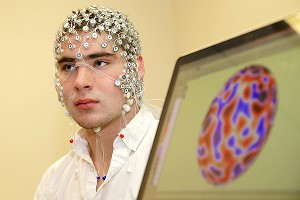
concussion_capNebraska to study concussions (ESPN):

"…the day is coming when a football player who takes a hit to the head will come to the sideline, take off his helmet and slip on an electrode-covered mesh cap…The team's medical staff will analyze the player's brain waves on the spot and determine within minutes whether he can safely return to the game or whether he has sustained a concussion and, if so, how severe.

"There's no question it's going to move the dial forward," NCAA chief medical officer Brian Hainline said. "The big, hoped-for dream would be, let's have a biomarker in brain imaging. If you're to the left of that, you're safe; if you're to the right of it, you're not. That's probably a few years out. But functional brain imaging and blood flow are going to be a very important part of that."

Related article:


Article: Computerized memory training lead... [Am J Intellect Dev Disabil. 2013] - PubMed


Computerized memory training lead... [Am J Intellect Dev Disabil. 2013] - PubMed
http://www.ncbi.nlm.nih.gov/pubmed/23734613

Sent via Flipboard


Friday, July 05, 2013

Reading or watching TV tonight? [feedly]


Shared via feedly // published on SharpBrains // visit site
Reading or watching TV tonight?

booksBeing a Lifelong Bookworm May Keep You Sharp in Old Age (Smithsonian.com):

"…findings, published online today in Neurology, suggest that reading books, writing and engaging in other similar brain-stimulating activities slows down cognitive decline in old age, independent of common age-related neurodegenerative diseases. In particular, people who participated in mentally stimulating activities over their lifetimes, both in young, middle and old age, had a slower rate of decline in memory and other mental capacities than those who did not…

Reading gives our brains a workout because comprehending text requires more mental energy than, for example, processing an image on a television screen."

StudyLife-span cognitive activity, neuropathologic burden, and cognitive aging (Neurology). From the Abstract:

  • Objective: To test the hypothesis that cognitive activity across the life span is related to late-life cognitive decline not linked to common neuropathologic disorders.
  • Methods: On enrollment, older participants in a longitudinal clinical-pathologic cohort study rated late-life (i.e., current) and early-life participation in cognitively stimulating activities. After a mean of 5.8 years of annual cognitive function testing, 294 individuals had died and undergone neuropathologic examination. Chronic gross infarcts, chronic microscopic infarcts, and neocortical Lewy bodies were identified, and measures of β-amyloid burden and tau-positive tangle density in multiple brain regions were derived.
  • Conclusions: More frequent cognitive activity across the life span has an association with slower late-life cognitive decline that is independent of common neuropathologic conditions, consistent with the cognitive reserve hypothesis.


Memory Interventionist Certification Program; Psychological Processing Analyzer 2.0; Review of CPPS


On behalf of my friend and colleague, Dr. Milton Dehn, I am sharing some announcements from Schoolhouse Educational Services..

First is a Memory Interventionist Certification Program for psychologists and school psychologists.  This is a 36-hour, competency-based program to train psychologists on evidence-based methods to improve memory, learning, and daily functioning for individuals with memory programs.

Second, version 2.0 of the Psychological Processing Analyzer will be released in a few weeks.  This software is designed to identify the pattern of strengths and weaknesses among psychological processes.

I have no financial interests in either of these two activities/products.  However, I was the measurement consultant for Dr. Dehn's Children's Psychological Processing Scale (CPPS) and do have a small financial royalty interest in the sales of that instrument.  The CPPS was just independently review in the Journal of Psychological Assessment (click here).

Tuesday, July 02, 2013

Individual differences in the gesture effect on working memory [feedly]


Shared via feedly // published on PSYCHONOMIC BULLETIN REVIEW - Web of Knowledge // visit site
Individual differences in the gesture effect on working memory
Title: Individual differences in the gesture effect on working memory
Author(s): Marstaller, Lars; Burianova, Hana
Source: PSYCHONOMIC BULLETIN & REVIEW, 20 (3): 496-500 JUN 2013
IDS#: 155SI. ISSN: 1069-9384


Article: Head Start children and parents show robust gains in new intervention | Communications


Head Start children and parents show robust gains in new intervention | Communications
http://uonews.uoregon.edu/archive/news-release/2013/7/head-start-children-and-parents-show-robust-gains-new-intervention

Sent via Flipboard


Monday, July 01, 2013

Article: A Visual Guide To Every Single Learning Theory


Investment and intellect: A review and meta-analysis. [feedly]


Shared via feedly // published on Psychological Bulletin - Vol 139, Iss 4 // visit site
Investment and intellect: A review and meta-analysis.
Cognitive or intellectual investment theories propose that the development of intelligence is partially influenced by personality traits, in particular by so-called investment traits that determine when, where, and how people invest their time and effort in their intellect. This investment, in turn, is thought to contribute to individual differences in cognitive growth and the accumulation of knowledge across the life span. We reviewed the psychological literature and identified 34 trait constructs and corresponding scales that refer to intellectual investment. The dispositional constructs were further classified into 8 related trait categories that span the construct space of intellectual investment. Subsequently, we sought to estimate the association between the identified investment traits and indicators of adult intellect, including measures of crystallized intelligence, academic performance (e.g., grade point average), college entry tests, and acquired knowledge. A meta-analysis of 112 studies with 236 coefficients and an overall sample of 60,097 participants indicated that investment traits were mostly positively associated with adult intellect markers. Meta-analytic coefficients ranged considerably, from 0 to .58, with an average estimate of .30. We concluded that investment traits are overall positively related to adult intellect; the strength of investment–intellect associations differs across trait scales and markers of intellect; and investment traits have a diverse, multifaceted nature. The meta-analysis also identified areas of inquiry that are currently lacking in empirical research. Limitations, implications, and future directions are discussed. (PsycINFO Database Record (c) 2013 APA, all rights reserved)


Measuring executive function in early childhood: A focus on maximal reliability and the derivation of short forms. [feedly]


Shared via feedly // published on Psychological Assessment - Vol 25, Iss 2 // visit site
Measuring executive function in early childhood: A focus on maximal reliability and the derivation of short forms.
This study assesses the maximal reliability of a newly developed battery of executive function (EF) tasks for use in early childhood. It also demonstrates how changes in maximal reliability can inform the selection of different short forms of the battery, depending on child age. Participants included children from the Family Life Project (Vernon-Feagans, Cox, & Family Life Project Investigators, in press)—a prospective longitudinal study (N = 1,292) of families that were recruited at the time of the birth of a new child—who were assessed at ages 3, 4, and 5 years. Results indicate that the EF battery had reasonably good maximal reliability (ρ = .73, 95% confidence interval [CI] = .69, .76) in a mixed-age sample of children randomly selected from assessments at ages 3, 4, and 5. In contrast, maximal reliability of the battery ranged from poor to modest for within-age samples (ρs = .47 [95% CI = .37, .52], .62 [.57, .66], and .61 [.55, .66] at ages 3, 4, and 5, respectively). Although the derivation of a 3-task short form of the battery always resulted in statistically significant decrements in maximal reliability, in some cases the relative decrement was quite modest and may be tolerable given the time savings and potential reduction in participant burden. The benefits of using maximal reliability to both evaluate task batteries and derive short forms are discussed, as well as how a focus on maximal reliability informs ongoing questions about the measurement and conceptualization of EF in early childhood. (PsycINFO Database Record (c) 2013 APA, all rights reserved)


Structural and incremental validity of the Wechsler Adult Intelligence Scale–Fourth Edition with a clinical sample. [feedly]


Shared via feedly // published on Psychological Assessment - Vol 25, Iss 2 // visit site
Structural and incremental validity of the Wechsler Adult Intelligence Scale–Fourth Edition with a clinical sample.
Structural and incremental validity of the Wechsler Adult Intelligence Scale–Fourth Edition (WAIS–IV; Wechsler, 2008a) was examined with a sample of 300 individuals referred for evaluation at a university-based clinic. Confirmatory factor analysis indicated that the WAIS–IV structure was best represented by 4 first-order factors as well as a general intelligence factor in a direct hierarchical model. The general intelligence factor accounted for the most common and total variance among the subtests. Incremental validity analyses indicated that the Full Scale IQ (FSIQ) generally accounted for medium to large portions of academic achievement variance. For all measures of academic achievement, the first-order factors combined accounted for significant achievement variance beyond that accounted for by the FSIQ, but individual factor index scores contributed trivial amounts of achievement variance. Implications for interpreting WAIS–IV results are discussed. (PsycINFO Database Record (c) 2013 APA, all rights reserved)


The criterion-related validity of personality measures for predicting GPA: A meta-analytic validity competition. [feedly]


Shared via feedly // published on Psychological Assessment - Vol 25, Iss 2 // visit site
The criterion-related validity of personality measures for predicting GPA: A meta-analytic validity competition.
Interest in the role of personality traits in predicting academic performance outcomes has steadily increased over the last several decades, enough to produce a number of meta-analyses that summarize this research (e.g., Poropat, 2009; Richardson, Abraham, & Bond, 2012). These previous meta-analyses combine a variety of alternative personality measures under the assumption that they all reflect the same personality traits and thus predict outcomes similarly. The current meta-analysis tests this assumption by comparing different personality measures when predicting postsecondary grade point average (GPA). The operational validities (r+) of 5 frequently used measures of the Big Five personality traits were compared: the NEO Personality Inventory—Revised (NEO-PI–R; Costa & McCrae, 1992), the NEO Five-Factor Inventory (NEO-FFI; Costa & McCrae, 1992), the Big Five Inventory (BFI; e.g., Benet-Martínez & John, 1998), Goldberg's (1992) unipolar Big Five Factor Markers (Markers), and the Big Five International Personality Item Pool (IPIP; Goldberg, 1999). A systematic review of the psychological literature from 1992 to 2012 was conducted, identifying 51 studies containing 274 correlations. Conscientiousness demonstrated the strongest criterion-related validity for predicting GPA (r+ = .23), consistent with previous meta-analyses; in addition, this overall validity was found to be robust across measures (rBFI+ = .24, rIPIP+ = .21, rMarkers+ = .15, rNEO-FFI+ = .24, rNEO-PI–R+ = .26). Although the criterion-related validities for Extraversion, Agreeableness, Neuroticism, and Openness to Experience (Intellect) differed by measure, they were generally low (r+s < .10). Practical implications of the findings and directions for future research are discussed. (PsycINFO Database Record (c) 2013 APA, all rights reserved)

Incremental criterion validity of WAIS–IV factor index scores: Relationships with WIAT–II and WIAT–III subtest and composite scores. [feedly]


Shared via feedly // published on Psychological Assessment - Vol 25, Iss 2 // visit site
Incremental criterion validity of WAIS–IV factor index scores: Relationships with WIAT–II and WIAT–III subtest and composite scores.
The present study examined the incremental validity of Wechsler Adult Intelligence Scale–4th Edition (WAIS–IV; Wechsler, 2008a) factor index scores in predicting academic achievement on the Wechsler Individual Achievement Test–2nd Edition (WIAT–II; Psychological Corporation, 2002a) and on the Wechsler Individual Achievement Test–3rd Edition (WIAT–III; Wechsler, 2009a) beyond that predicted by the WAIS–IV Full Scale IQ (FSIQ). As with previous intelligence test incremental validity studies, the WAIS–IV FSIQ accounted for statistically significant and generally large portions of WIAT–II and WIAT–III subtest and composite score variance. WAIS–IV factor index scores combined to provide statistically significant increments in variance accounted for in most WIAT–II and WIAT–III subtest and composite scores over and above the FSIQ score; however, the effect sizes ranged from trivial to medium as observed in investigations with other intelligence tests (i.e., Glutting, Watkins, Konold, & McDermott, 2006; Youngstrom, Kogos, & Glutting, 1999). Individually, the WAIS–IV factor index scores provided trivial to small unique contributions to predicting WIAT–II and WIAT–III scores. This finding indicated that the FSIQ should retain primacy and greatest interpretive weight in WAIS–IV interpretation, as previously indicated by WAIS–IV subtest variance partitions form hierarchical exploratory factor analyses (Canivez & Watkins, 2010a, 2012b). (PsycINFO Database Record (c) 2013 APA, all rights reserved)


Long-term stability of the Wechsler Intelligence Scale for Children—Fourth Edition. [feedly]


Shared via feedly // published on Psychological Assessment - Vol 25, Iss 2 // visit site
Long-term stability of the Wechsler Intelligence Scale for Children—Fourth Edition.
Long-term stability of the Wechsler Intelligence Scale for Children—Fourth Edition (WISC–IV; Wechsler, 2003) was investigated with a sample of 344 students from 2 school districts twice evaluated for special education eligibility at an average interval of 2.84 years. Test–retest reliability coefficients for the Verbal Comprehension Index (VCI), Perceptual Reasoning Index (PRI), Working Memory Index (WMI), Processing Speed Index (PSI), and the Full Scale IQ (FSIQ) were .72, .76, .66, .65, and .82, respectively. As predicted, the test–retest reliability coefficients for the subtests (Mdn = .56) were generally lower than the index scores (Mdn = .69) and the FSIQ (.82). On average, subtest scores did not differ by more than 1 point, and index scores did not differ by more than 2 points across the test–retest interval. However, 25% of the students earned FSIQ scores that differed by 10 or more points, and 29%, 39%, 37%, and 44% of the students earned VCI, PRI, WMI, and PSI scores, respectively, that varied by 10 or more points. Given this variability, it cannot be assumed that WISC–IV scores will be consistent across long test–retest intervals for individual students. (PsycINFO Database Record (c) 2013 APA, all rights reserved)

Exploratory and higher order factor analysis of the WJ-III full test battery: A school-aged analysis. [feedly]


Shared via feedly // published on Psychological Assessment - Vol 25, Iss 2 // visit site
Exploratory and higher order factor analysis of the WJ-III full test battery: A school-aged analysis.
[Correction Notice: An Erratum for this article was reported in Vol 25(2) of Psychological Assessment (see record 2013-22270-001). In Table 4 the last column heading appears as F1. It should appear as F6. The captions for Tables 2, 4, 6, and 8 include the language F1-F5 Factor 1-5. The captions should read F1-F6 Factor 1-6.] Development of the Woodcock-Johnson (3rd ed.; WJ-III; Woodcock, McGrew & Mather, 2001a) was guided in part by Carroll's (1993) 3-stratum theory of cognitive abilities and based on confirmatory factor analysis (CFA), even though Carroll used exploratory factor analysis (EFA) to derive his theory. Using CFA, McGrew and Woodcock (2001) found a 9-factor model across all age ranges. To determine if the 9-factor structure holds for the full WJ-III battery, we applied currently recognized best practices in EFA to 2 school-aged 42-subtest correlation matrices (ages 9–13 and 14–19 years). Six factors emerged at the 9–13 age range, while 5 factors were indicated at the 14–19 age range. The resulting 1st-order factors displayed patterns of both convergence with and divergence from the WJ-III results presented in the Technical Manual. These results also revealed a robust manifestation of general intelligence (g) that dwarfed the variance attributed to the lower order factors. It is surprising that this study represents the first time the WJ-III full battery was subjected to EFA analyses given the instrument's significant use by practitioners and that it served as the initial evidentiary basis for Cattell-Horn-Carroll (CHC) theory. The lack of confirmation of CFA results with EFA methods in the current study permits questioning of the structure of the WJ-III and its relationship with CHC theory. Additional independent, structural analyses are clearly indicated for the WJ-III full test battery before we can be confident in its structure. (PsycINFO Database Record (c) 2013 APA, all rights reserved)


An alternative Cattell–Horn–Carroll (CHC) factor structure of the WAIS-IV: Age invariance of an alternative model for ages 70–90. [feedly]


Shared via feedly // published on Psychological Assessment - Vol 25, Iss 2 // visit site
An alternative Cattell–Horn–Carroll (CHC) factor structure of the WAIS-IV: Age invariance of an alternative model for ages 70–90.
The Wechsler Adult Intelligence Scale—Fourth Edition (WAIS-IV) is by the far the most popular intelligence test for the assessment of adults in clinical and neuropsychological practice. Despite a number of studies examining the factor structure of the WAIS-IV from a Cattell–Horn–Carroll (CHC) perspective (Benson, Hulac, & Kranzler, 2010; Ward, Bergman, & Hebert, 2012), a CHC interpretation of the WAIS-IV for individuals ages 70 and above has been absent from the literature. The exclusion of individuals ages 70 and above in previous research is likely due to the absence of several key supplemental subtests used to create a full CHC model. We provide an alternative five-factor CHC model of the WAIS-IV which includes only the subtests administered to individuals ages 70 and above in the standardization sample. Our results show (a) the alternative CHC model fits the data well; (b) this alternative CHC model met criteria for partial strict measurement invariance across the life span (only Similarities showed noninvariance) using strict criteria; (c) the five factors for ages 70–90 measure the same five CHC broad abilities identified in previous analyses reported for ages 16–69; and (d) the five-factor CHC solution for ages 70–90 is valid for the entire WAIS-IV age range and can be used whenever examiners administer the core battery but opt not to administer supplemental subtests. (PsycINFO Database Record (c) 2013 APA, all rights reserved)


Cognitive predictors of rapid picture naming [feedly]


Shared via feedly // published on LEARNING AND INDIVIDUAL DIFFERENCES - Web of Knowledge // visit site
Cognitive predictors of rapid picture naming
Title: Cognitive predictors of rapid picture naming
Author(s): Decker, Scott L.; Roberts, Alycia M.; Englund, Julia A.
Source: LEARNING AND INDIVIDUAL DIFFERENCES, 25 (): 141-149 JUN 2013
IDS#: 154BL. ISSN: 1041-6080


The structure of visuospatial memory in adulthood [feedly]


Shared via feedly // published on LEARNING AND INDIVIDUAL DIFFERENCES - Web of Knowledge // visit site
The structure of visuospatial memory in adulthood
Title: The structure of visuospatial memory in adulthood
Author(s): Mammarella, Irene C.; Borella, Erika; Pastore, Massimiliano; et al.
Source: LEARNING AND INDIVIDUAL DIFFERENCES, 25 (): 99-110 JUN 2013
IDS#: 154BL. ISSN: 1041-6080


The roles of cognitive and motivational predictors in explaining school achievement in elementary school [feedly]


Shared via feedly // published on LEARNING AND INDIVIDUAL DIFFERENCES - Web of Knowledge // visit site
The roles of cognitive and motivational predictors in explaining school achievement in elementary school
Title: The roles of cognitive and motivational predictors in explaining school achievement in elementary school
Author(s): Weber, Heike S.; Lu, Liping; Shi, Jiannong; et al.
Source: LEARNING AND INDIVIDUAL DIFFERENCES, 25 (): 85-92 JUN 2013
IDS#: 154BL. ISSN: 1041-6080


The development of early numeracy ability in kindergartners with limited working memory skills [feedly]


Shared via feedly // published on LEARNING AND INDIVIDUAL DIFFERENCES - Web of Knowledge // visit site
The development of early numeracy ability in kindergartners with limited working memory skills
Title: The development of early numeracy ability in kindergartners with limited working memory skills
Author(s): Toll, Sylke W. M.; Van Luit, Johannes E. H.
Source: LEARNING AND INDIVIDUAL DIFFERENCES, 25 (): 45-54 JUN 2013
IDS#: 154BL. ISSN: 1041-6080


The 100 most followed psychologists and neuroscientists on Twitter [feedly]


Shared via feedly // published on BPS Research Digest // visit site
The 100 most followed psychologists and neuroscientists on Twitter
Here are the 100 most followed psychologists and neuroscientists on Twitter based on follower counts recorded over the last few weeks. If we've missed anyone who should be here, please let us know via comments and we'll add them in. This is an update to our September 2011 post "Psychologists who Tweet". Check the comments to that earlier post for even more psychologists on Twitter than we were able to include here.

Richard Wiseman. Parapsychologist. Followers: 121261
Laura Kauffman. Child psychologist. Followers: 106623
Steven Pinker. Psycholinguist, evolutionary psychologist, author. Followers: 74775
George Huba. Psychologist. Followers: 53644
Leah Klungness. Author and psychologist. Followers: 53063
Dolors Reig. Social psychologist (tweets in Spanish). Followers: 51383
Dan Ariely. Behavioural Economist, author. Followers: 49533
Jonah Lehrer. Writer, blogger. Followers: 46259
Marsha Lucas. Neuropsychologist. Followers: 31273
BPS Research Digest. The BPS Research Digest! Followers: 30007
Melanie Greenberg. Clinical health psychologist. Followers: 28104
Aleks Krotoski. Psychologist, tech journalist. Followers: 22583
Neuroskeptic. Blogger and neuroscientist. Followers: 19851
Jo Hemmings. Celebrity psychologist. Followers: 19548
Vaughan Bell. Clinical neuropsychologist, blogger. Followers: 17992
Melissa McCreery. Clinical Psychologist. Followers: 17289
Richard Thaler. Behavioural economist. Followers: 16709.
Jeremy Dean. Blogger. Followers: 16404
Mo Costandi. Writer, blogger. Followers: 15689
David Eagleman. Neuroscientist, author. Followers: 15509
David Ballard. Psychologist, Head of APA marketing. Followers: 14479
The Psychologist magazine. Followers: 14176
BPS Official. Followers 14169
Anthony Risser. Neuropsychologist, blogger. Followers: 13245
Daniel Levitin. Psychologist, author. Followers: 12985
Honey Langcaster-James. Psychologist and coach. Followers: 11291
Sarah-Jayne Blakemore. Cognitive neuroscientist. Followers: 10373
Ciaran O'Keeffe. Parapsychologist. Followers: 10251
Dorothy Bishop. Developmental neuropsychologist. Followers: 9976
Petra Boynton. Psychologist, sex educator. Followers: 9895
Jay Watts. Clinical psychologist, Lacanian. Followers: 8719
David Webb. Psychology tutor, blogger. Followers: 7851
Uta Frith. Developmental neuropsychologist, autism expert. Followers: 7774
Simon Baron-Cohen. Developmental psychologist. Followers: 7383
Graham Jones. Internet (cyber) psychologist. Followers: 7255
Christian Jarrett. Psychologist and writer/editor. Followers: 7135
Margarita Holmes. Psychologist and sex therapist. Followers: 7053
Cary Cooper. Occupational psychologist. Followers: 6876
Bruce Hood. Cognitive scientist. Followers: 6814
Susan Weinschenk. Psychologist and author. Followers: 6561
Todd Finnerty. Psychologist. Followers: 5783
Bradley Voytek. Neuroscientist and self-professed geek. Followers: 5775
Miriam Law-Smith. Clinical evolutionary psychologist. Followers: 5700
Claudia Hammond. Radio presenter. Followers: 5661
John Grohol. Founder of Psychcentral. Followers: 5612
Jason Goldman. Grad student, blogger. Followers: 5382
G. Tendayi Viki. Social psychologist. Followers: 5224
Sophie Scott. Neuroscientist. Followers: 4954
Neuro Bonkers. Blogger. Followers: 4944
Jon Sutton. Editor of The Psychologist. Followers: 4448
Marco Iacoboni. Neuroscientist, mirror neuron expert. Followers: 4396
Jesse Bering. Psychologist, blogger. Followers: 4154
Rita Handrich. Psychologist, editor. Followers: 4152
Sandeep Gautam. Blogger. Followers: 4022
Steven Brownlow. Clinical and forensic psychologist. Followers: 3979
Joseph LeDoux. Neuroscientist, rocker. Followers: 3911
The Neurocritic. Blogger. Followers: 3894
Chris French. Anomalistic psychologist. Followers: 3818
Lyle Becourtney. Specialist in anger management. Followers: 3739
Mark Changizi. Cognitive psychologist, author. Followers: 3610
Charles Fernyhough. Developmental psychologist, author. Followers: 2545
Pam Dodd. Organisational psychologist. Followers: 3321
Maria Panagiotidi. Grad student. Followers: 3263
John Cacioppo. Psychologist, social neuroscientist. Followers: 3133
Daniel Simons. Cognitive psychologist, author. Followers: 3285
Scott Kaufman. Cognitive psychologist. Followers: 3190
Rory O'Connor. Health psychologist, suicide researcher. Followers: 3162
Brian MacDonald. Clinical psychologist. Followers: 3015
Wendy Cousins. Psychologist and skeptic. Followers: 2881
Chris Atherton. Cognitive psychologist. Followers: 2718
Rebecca Symes. Sports psychologist. Followers: 2559
Andrew and Sabrina. Psychological scientists. Followers: 2540
BPS Occupational Digest. The BPS Occupational Digest. Followers: 2497
Atle Dyregrov. Psychologist, expert in crisis psychology. Followers: 2381
Ana Loback. Psychologist. Followers: 2348
Fretes Torruella. Educational psychologist (tweets in Spanish and English). Followers: 2301
Tom Stafford. Psychologist, author. Followers: 2298
Jon Simons. Cognitive scientist. Followers: 2151
Jon Brock. Autism blogger, wannabe neuroscientist. Followers: 2125
Tom Hartley. Neuroscientist. Followers: 2030
Rolfe Lindgren. Psychologist, personality expert. Followers: 1860
Wray Herbert. Writer for APS, author. Followers: 1859
Rob Archer. Organisational psychologist. Followers: 1781
Michelle Dawson. Autistic researcher. Followers: 1666
Alex Linley. Positive psychologist. Followers: 1611
Manon Eileen. Clinical psychologist and criminologist. Followers: 1595
Michael Hogan. Psychologist and neuroscientist. Followers: 1570
Karen Pine. Psychologist, author. Followers: 1546
Monica Whitty. Cyberpsychologist. Followers: 1543
Ioannis Nikolaou. Organisational psychologist (tweets in Greek and English). Followers: 1534
David Matsumoto. Psychologist and judoka. Followers: 1527
Victoria Galbraith. Counselling psychologist. Followers: 1482
Dave Brodbeck. Comparative cognition and evolutionary psychologist. Followers: 1474
Christine Allen. Clinical psychologist and executive coach. Followers: 1470
Daryl O'Connor. Health psychologist. Followers: 1470
Peter Kinderman. Clinical psychologist. Followers: 1464
Jonathan Firth. Psychology teacher and author. Followers: 1393
Voula Grand. Psychologist and writer. Followers: 1355
Jenna Condie. Environmental psychologist. Followers: 1320
Ciaran Mc Mahon. Psychologist. Followers: 1304

If we've missed any psychologists or neuroscientists who should be in the top 100 please let us know via comments and we'll add them in.

--Thanks to Emma Smith for compiling the update.