Friday, October 31, 2008

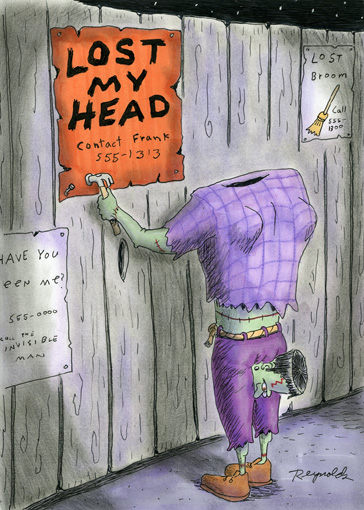
Happy Halloween

Reynolds Unwrapped by Dan Reynolds
Rw081031        

Sent from KMcGrew iPhone (IQMobile)

Lifetime of IQ research by Deary book

Sent from KMcGrew iPhone (IQMobile)

A Lifetime of Intelligence
Follow-Up Studies of the Scottish Mental Surveys of 1932 and 1947
Ian J. Deary, PhD; Lawrence J. Whalley, PhD; and John M. Starr, PhD

285 pages. List price: $69.95. APA member/Affiliate price: $49.95
ISBN 978-1-4338-0400-7 Item # 4318049
http://books.apa.org/books.cfm?id=4318049


To order APA books call 800-374-2721, fax to 202-336-5502, or visit www.apa.org/books.

You are receiving this e-mail because you have indicated an interest in new APA publications. To cancel or modify your account with PsycALERTs, please visit http://notify.apa.org/


Thursday, October 30, 2008

Friday, October 24, 2008

WJ test reliability over time

"A test does not change from one time to another: people do. There may be considerable change on some traits, but relatively little on others. Test-retest studies evaluate the tendency for change in people, not some aspect of test quality. A test that does not reflect such changes in human traits would be an insensitive measure of those traits" (McGrew, Werder, & Woodcock, 199, p. 99).

Over on the NASP Listserv Dr. Gary Canivez asked the following question, in response to a post regarding changes in scores on the K-ABC and WJ---"Does anyone have references for long-term stability of WJ or KABC-2 scores? I'd be interested in references for such studies."

There was a very sophisticated test-retest study reported in the WJ-R Technical Manual (McGrew, Werder & Woodcock, 1991) (click here to view/download). Unfortunately it is in a test technical manual...a document that is too often ignored once a test is purchased. Additonal information can be found in the following article.

  • McArdle, J. J., FerrerCaja, E., Hamagami, F., & Woodcock, R. W. (2002). Comparative longitudinal structural analyses of the growth and decline of multiple intellectual abilities over the life span. Developmental Psychology, 38(1), 115-142. (click to view)
I urge practicing psychologists to read these reports. Yes..they are hard to digest. They are not reporting simple test-retest correlations. Instead, they are complex research designs intended to identify and partition the sources of test score variance that change over time. Scores for some tests will change over time...and this is what you want...as it is reflecting trait variance....some traits do change over time (just as our weight changes over time...unfortunately, using in an upward direction). Other traits measured by tests are more stable across time...and thus the scores will likely change less.

And then, of course, a person's state (concentration, anxiety, fatigue, etc.) at any testing moment can impact test performance...and test's sensitive to these states (e.g., Gsm, Gs) will likely reflect these temporary state fluctuations. This reflects state variance...which is NOT a problem with the measure...the measure is accurately reflecting how the person is doing at that time. School psychologists (and others who do psychological testing), unfortunately, typically receive measurement training that only talks about simple test-retest reliability studies and results....a diservice to our profession. We need to understand our instruments better. Properly designed test-retest studies, where the retest interval is varied, can help identify and portion the difference sources of test score variance to the appropriate sources of stable or unstable change score variance.

Read the WJ-R technical manual excerpt in particular. It is the most readable and understandable of the two sources I've included in this post.

Technorati Tags: , , , , , , , , , , , ,

Thursday, October 23, 2008

WISC-III/WJ III cross-battery Guttman 2-D Radex analysis

One more WISC-III/WJ III cross-battery analysis--this time a 2-D Guttman Radex MDS model (click here).  As readers have noted, I've been on a bit of a data analysis binge this past week (in preparation for writing a manuscript---and after being refreshed by an actual 2+ week vacation) and have reported:  (a) WISC-III/WJ III cross-battery g+specific cog-ach relations SEM, (b) WJ III 2-D Guttman Radex MDS of WJ III norm sample ages 6-8, and (c) WJ III 3-D Guttman Radex MDS of ages 9-13 of norm sample.  It is hoped these analyses provide useful information in understanding the characteristics of the tests in the WJ III and Wechsler intelligence batteries.

Unfortunately this analysis is based on the WISC-III and not the more recent WISC-IV.  Nevertheless, the results still provide useful information on the WISC-III tests that are still present in the WISC-IV.

Given all I've written regarding the various MDS models, I'm going to only make a few comments and hope others take the presentation of these data to engage in additional discussion, interpretion, etc.----have some fun.

A few observations/comments:
  • Gv tests (both WISC-III and WJ III) continue to surface on the more outer rings of the MDS models---suggesting that they are more lower-level perceptual/processing measures and do not capture complex Gv cognitive processing.  See my Gv comments on this the other day.  The same can be said for Ga tests.
  • WJ III Understanding Directions is consistently one of the more cognitive complex tests.  And, it is largely a language-based measure of working memory (Gsm-MW).  Remember that as per the Radex model, cognitive complexity deals with the amount of elements/components that are processed.....and is not the same as abstract thinking (Gf-ish stuff).  WJ III Numbers Reversed also shows up close to the center, with WISC-III Digit Span not far behind.  Does this support the popular working memory=Gf/g research hypothesis?
  • The Gc tests from both batteries appear similar in placement.
  • As would be expected, the WJ III Gf tests (Concept Formation, Numerical Reasoning [which is a combo of Number Series and Number Matrices], and Analysis-Synthesis are within the center "cognitive complexity" circle.
I'm sure there is much more that can be gleaned, but I'll leave that to the readers to discover, debate, and discuss.  I actually think a 3-D MDS model is necessary to capture the characteristics of the measures...but I've run out of time and steam on these analysis.  Maybe at a later date.

A couple caveats I provided the other day are also relevant here--(a) I'm a coauthor of the WJ III (conflict of interest disclosure) and (b) these results have not been peer-reviewed


Wednesday, October 22, 2008

Wikipedia article 'Raymond Cattell'


Sent from KMcGrew iPhone (IQMobile)

Wikipedia article 'John B. Carroll'


Sent from KMcGrew iPhone (IQMobile)

Wikipedia article 'Chc theory'


Sent from KMcGrew iPhone (IQMobile)

WJ III EWOK (Evolving Web of Knowledge) v3.1 is now available

v3.1 of the WJ III EWOK (Evolving Web of Knowledge) is now available.


Technorati Tags: , , , , , , , , , , , , , , , ,

powered by performancing firefox

Braille Adaptation of WJ III Tests of Achievement

Thanks to Lynne Jaffe for providing an update on the Braille Adaptation of the WJ III Tests of Achievement. A description can be found at v3.1 of the WJ III EWOK If you want to skip the "big picture" of the WJ III EWOK and go directly past go, and go directly to the relevant information, click here.

Technorati Tags: , , , , , , , , , ,

Tuesday, October 21, 2008

Computerized cognitive assessments

Interesting post from the most visible brain fitness company on the
Internet.

http://www.sharpbrains.com/blog/2008/10/20/cognitive-assessments-headminder-anam-and-more/


Sent from KMcGrew iPhone (IQMobile)

PS caveat to prior WISCIII/W III study post

I failed to mention one additional important caveat in the prior
post. The study results I posted have not been peer-reviewed.

Sent from KMcGrew iPhone (IQMobile)

WISC-III/WJ III cross-battery g+specific cog-ach abilities findings

WISC-III/WJ III cross-battery g+specific abilities research reinforces "just say maybe" program of CHC g+specific abilities research.

I'm just starting the process of drafting a manuscript to summarize the results of the IAP CHC COG-ACH Correlates Meta-Analysis project (click here).  In that on-line EWOK (Evolving Web of Knowledge) I list a McGrew (2007a) study in the reading and math summary tables.  That reference reflects unpublished re-analysis I completed (last fall) with the Phelps et al. (2007) joint (cross-battery) WISC-III/WJ III dataset.  In order to include the findings in the synthesis manuscript, I felt it appropriate to at least informally publish the final models for reference. 

Two important caveats.  I'm a coauthor of the WJ III (conflict of interest disclosure).  The second caveat is outlined in the brief report of the results that I have posted.  When I have time I will update the synthesis EWOK. I will change the reference to McGrew (2008) reflecting posting.

Technorati Tags: , , , , , , , , , , , ,