Tuesday, June 18, 2013

Where's the action? The pragmatic turn in cognitive science [feedly]


Shared via feedly // published on TRENDS IN COGNITIVE SCIENCES - Web of Knowledge // visit site
Where's the action? The pragmatic turn in cognitive science
Title: Where's the action? The pragmatic turn in cognitive science
Author(s): Engel, Andreas K.; Maye, Alexander; Kurthen, Martin; et al.
Source: TRENDS IN COGNITIVE SCIENCES, 17 (5): 202-209 MAY 2013
IDS#: 149GZ. ISSN: 1364-6613


Mindfulness Training Improves Working Memory Capacity and GRE Performance While Reducing Mind Wandering [feedly]


Shared via feedly // published on PSYCHOLOGICAL SCIENCE - Web of Knowledge // visit site
Mindfulness Training Improves Working Memory Capacity and GRE Performance While Reducing Mind Wandering
Title: Mindfulness Training Improves Working Memory Capacity and GRE Performance While Reducing Mind Wandering
Author(s): Mrazek, Michael D.; Franklin, Michael S.; Phillips, Dawa Tarchin; et al.
Source: PSYCHOLOGICAL SCIENCE, 24 (5): 776-781 MAY 2013
IDS#: 143GI. ISSN: 0956-7976


Who Rises to the Top? Early Indicators [feedly]


Shared via feedly // published on PSYCHOLOGICAL SCIENCE - Web of Knowledge // visit site
Who Rises to the Top? Early Indicators
Title: Who Rises to the Top? Early Indicators
Author(s): Kell, Harrison J.; Lubinski, David; Benbow, Camilla P.
Source: PSYCHOLOGICAL SCIENCE, 24 (5): 648-659 MAY 2013
IDS#: 143GI. ISSN: 0956-7976


Absorption in music: Development of a scale to identify individuals with strong emotional responses to music [feedly]


Shared via feedly // published on PSYCHOLOGY OF MUSIC - Web of Knowledge // visit site
Absorption in music: Development of a scale to identify individuals with strong emotional responses to music
Title: Absorption in music: Development of a scale to identify individuals with strong emotional responses to music
Author(s): Sandstrom, Gillian M.; Russo, Frank A.
Source: PSYCHOLOGY OF MUSIC, 41 (2): 216-228 MAR 2013
IDS#: 146XP. ISSN: 0305-7356


Are measurement theories falsifiable, and should we care? [feedly]


Shared via feedly // published on THEORY PSYCHOLOGY - Web of Knowledge // visit site
Are measurement theories falsifiable, and should we care?
Title: Are measurement theories falsifiable, and should we care?
Author(s): Trafimow, David
Source: THEORY & PSYCHOLOGY, 23 (3): 397-400 JUN 2013
IDS#: 148CG. ISSN: 0959-3543


Article: Eye-Tracking Software May Reveal Autism and other Brain Disorders


Monday, June 17, 2013

Approaches to Learning and Hispanic Children's Math Scores: The Moderating Role of English Proficiency [feedly]


Shared via feedly // published on HISPANIC JOURNAL OF BEHAVIORAL SCIENCES - Web of Knowledge // visit site
Approaches to Learning and Hispanic Children's Math Scores: The Moderating Role of English Proficiency
Title: Approaches to Learning and Hispanic Children's Math Scores: The Moderating Role of English Proficiency
Author(s): Bumgarner, Erin; Martin, Anne; Brooks-Gunn, Jeanne
Source: HISPANIC JOURNAL OF BEHAVIORAL SCIENCES, 35 (2): 241-259 MAY 2013
IDS#: 143LK. ISSN: 0739-9863


The reservoir model: A differential equation model of psychological regulation. [feedly]


Shared via feedly // published on Psychological Methods - Vol 18, Iss 2 // visit site
The reservoir model: A differential equation model of psychological regulation.
Differential equation models can be used to describe the relationships between the current state of a system of constructs (e.g., stress) and how those constructs are changing (e.g., based on variable-like experiences). The following article describes a differential equation model based on the concept of a reservoir. With a physical reservoir, such as one for water, the level of the liquid in the reservoir at any time depends on the contributions to the reservoir (inputs) and the amount of liquid removed from the reservoir (outputs). This reservoir model might be useful for constructs such as stress, where events might "add up" over time (e.g., life stressors, inputs), but individuals simultaneously take action to "blow off steam" (e.g., engage coping resources, outputs). The reservoir model can provide descriptive statistics of the inputs that contribute to the "height" (level) of a construct and a parameter that describes a person's ability to dissipate the construct. After discussing the model, we describe a method of fitting the model as a structural equation model using latent differential equation modeling and latent distribution modeling. A simulation study is presented to examine recovery of the input distribution and output parameter. The model is then applied to the daily self-reports of negative affect and stress from a sample of older adults from the Notre Dame Longitudinal Study on Aging. (PsycINFO Database Record (c) 2013 APA, all rights reserved)


A critical review of Dr. James Flynn's "Are we getting smarter?" book


Dr. James Flynn  recently published a new book entitled "Are we getting smarter?", where he continues to outline his theoretical explanation for the systematic increase in average IQ scores over time due to IQ test norm obsolescence  (a.k.a., the Flynn Effect - click here to visit the Flynn Effect Archive Project).

Although an appealing theoretical explanation, his theory has not meet with universal acclaim, particularly regarding the underlying research methodology and logic that is the foundation of his theory.  In a new APA PsycCITIQUES review of Flynn's new ook, Kaufman, Dillon and Kirsch (2013) present a rather scathing critique of the book ("A beautiful theory, killed by a nasty, ugly little fact").

One of Kaufman et al.'s (2013) multiple criticisms is Flynn's failure to mention an important special issue of the Journal of Psychoeducational Assessment (JPA) re: the Flynn Effect.  In this JPA issue a number of scholars (myself included; McGrew, 2010) provided a number of methodological, theoretical, and logical criticisms of the major data analytic and logical linchipins of Dr. Flynn's theory.  Yet, in his new book he  ignores the critical articles in the JPA special  issue.  Kaufman et al.'s review is a recommended reading for scholars who seek to understand the Flynn Effect and who also seek to appropriately evaluate the strengths and limitations of Flynn's theory.

Errror in Dr. James Flynn's (2009) WAIS-IV norming data: Quest blog post by Dr. Dale Watson


This is a guest blog post by Dr. Dale Watson.  The opinions expressed do not necessarily reflect the official position of the ICDP blog or the blogmaster.  However, it is of interest to note that the error Dr. James Flynn (2009) made in reporting the WAIS-IV norming date (here reported by Dr. Dale Watson) is true, and was also in a published review that I received a few days after I received Dr. Watson's guest post.  This second verification source (Kaufman, Dillon, & Kirsch, 2013) will be the subject of my next post.

Dr. Dale Watson's guest post 


In an article entitled, The WAIS-III and WAIS-IV: Daubert motions favor the certainly false over the approximately true, Dr. James Flynn analyzed data from a number of IQ tests, including the WAIS-R, WAIS-III, and WAIS-IV to estimate the rate of the “Flynn Effect” on the Wechsler scales in the U.S. over time.[i] He concluded, as have others, that in order to account for the obsolescence of aging IQ test norms, a “Flynn Effect” adjustment of 0.30 points per year from the date of a tests norming should be applied to the obtained IQ test scores (Flynn, 2009; Fletcher et al., 2010). For example, if the WAIS-III (normed in 1995) was administered to an individual in 2005, the obtained IQ should be downwardly adjusted by 0.30 x 10 or 3.0 points. Thus, an obtained IQ score of 72 would result in a Flynn-adjusted score of 69. Such adjustments have been recommended for use in Atkins evaluations (Flynn, 2009; Gresham & Reschly, 2011; cf Hagen et al., 2010).[ii]

Flynn compared the IQ scores obtained on the WAIS-III and the WAIS-IV in a sample of 240 examinees reported in the Technical and Interpretive Manual for the WAIS-IV (2008).[iii] The Technical Manual reported that the mean IQs differed by 2.9 points with the sample mean for the WAIS-IV being 100 and for the WAIS-III 102.9 (Wechsler, 2008, p. 75). However, because these IQ scores were calculated using different combinations of subtests, Flynn re-calculated the IQ scores utilizing the same combination of 11 subtest scores used on the WAIS-III to calculate the IQs. Flynn (2009) noted, “The list of subtests used to compute Full Scale IQ had not only changed, but had dropped from 11 to 10. But, once again, they gave the comparison group all 11 of the old WAIS-III subtests, and once again that was fortunate because it meant that the true obsolescence of the WAIS-III could be measured. I calculated the total standard score the group got on the same 11 WAIS-III and WAIS-IV subtests. Using the totals and the WAIS-III conversion table, I calculated Full Scale IQs for the two tests” (p. 102). 

In examining Flynn’s Table 2, it appears that these calculations included scores for the Picture Arrangement subtest for both the WAIS-III and WAIS-IV. However, the Picture Arrangement subtest is not included in the WAIS-IV so it is quite unclear how this calculation was performed. Moreover, there is a footnote to this table indicating that the “WAIS-IV estimate is eccentric in carrying over WISC-III subtests (and scoring vs. the WAIS-III tables)…” but the meaning of this statement is also uncertain. In addition, substitution of the Symbol Search subtest for Picture Arrangement appears to yield very similar results.

In any case, the point of this note is not to recalculate Flynn’s estimates but rather to point out what appears to be a discrepancy between WAIS-IV norming date provided by Flynn and that found in the Technical and Interpretive Manual for the WAIS-IV. Flynn indicated that the WAIS-IV was normed in 2006 (Table 1) whereas the Manual reported, “The WAIS-IV normative data was established using a sample collected from March 2007 to April 2008.” [iv] If we use 2007 as the mid-point norming date, the time between the norming of the WAIS-III and WAIS-IV is 12 years and not 11 as provided by Flynn. Using the Flynn 2006 date resulted in a calculated Flynn Effect between the WAIS-III and WAIS-IV of 0.306 points per year (+3.37 / 11 years). Using the norming date provided in the manual resulted in a calculated score of 0.281 points per year (+3.37 / 12 years). It is understood that this discrepancy of just 0.025 points is of little practical significance but it should be noted nonetheless. Moreover, the metaphorical splitting of hairs is not uncommon when discussing the Flynn Effect. Hagan et al. (2010) asserted, “Decades of FE research and testimony… depict the amount of this shift as a moving target. For example, Flynn (1998) once identified the annual shift as 0.25 rather than 0.30, but later testified in Ex Parte Eric Dewayne Cathey (2010) that 0.29 would be appropriate. Schalock et al. (2010) have called for an annual adjustment of 0.33” pp. 1-2.[v] Flynn has acknowledged that the results reported in his report are estimates for the Wechsler scales, writing, “It is quite possible that the rate of gain on Wechsler tests is 0.275 or 0.325 points per year” (Flynn, 2009, p. 104). The recalculation noted here is consistent with this judgment. Further, the weight of the available evidence, including that of a recent meta-analysis, continues to support the Flynn Effect adjustment of 0.3 points per year.[vi]


[i] Flynn, J. R. (2009). The WAIS-III and WAIS-IV: Daubert motions favor the certainly false over the approximately true. Applied Neuropsychology, 16(2), 98-104. doi: 10.1080/09084280902864360
[ii] Gresham, F. M., & Reschly, D. J. (2011). Standard of practice and Flynn Effect testimony in death penalty cases. Intellectual and Developmental Disabilities, 49(3), 131-140. doi: 10.1352/1934-9556-49.3.131
[iii] Wechsler, D. (2008). Wechsler Adult Intelligence Scale: Technical and interpretive manual (4th ed.). San Antonio, TX: Pearson.
[iv] Id., p. 22.
[v] Hagan, L. D., Drogin, E. Y., & Guilmette, T. J. (2010). IQ scores should not be adjusted for the Flynn Effect in capital punishment cases. Journal of Psychoeducational Assessment, 28(5), 474-476. doi: 10.1177/0734282910373343
[vi] Fletcher, J. M., Stuebing, K. K., & Hughes, L. C. (2010). IQ scores should be corrected for the Flynn Effect in high-stakes decisions. Journal of Psychoeducational Assessment, 28(5), 469-473. doi: 10.1177/0734282910373341

Spatial language facilitates spatial cognition: Evidence from children who lack language input [feedly]


Shared via feedly // published on COGNITION - Web of Knowledge // visit site
Spatial language facilitates spatial cognition: Evidence from children who lack language input
Title: Spatial language facilitates spatial cognition: Evidence from children who lack language input
Author(s): Gentner, Dedre; Ozyurek, Asli; Guercanli, Oezge; et al.
Source: COGNITION, 127 (3): 318-330 JUN 2013
IDS#: 146JI. ISSN: 0010-0277


*

Size does matter: Women mentally rotate large objects faster than men [feedly]


Shared via feedly // published on SCANDINAVIAN JOURNAL OF PSYCHOLOGY - Web of Knowledge // visit site
Size does matter: Women mentally rotate large objects faster than men
Title: Size does matter: Women mentally rotate large objects faster than men
Author(s): Olsen, Bernt Ivar; Laeng, Bruno; Kristiansen, Kari-Ann; et al.
Source: SCANDINAVIAN JOURNAL OF PSYCHOLOGY, 54 (3): 196-204 JUN 2013
IDS#: 137MX. ISSN: 0036-5564


Top 5 Quotes from The SharpBrains Guide to Brain Fitness (and free chapter) [feedly]


Shared via feedly // published on SharpBrains // visit site
Top 5 Quotes from The SharpBrains Guide to Brain Fitness (and free chapter)

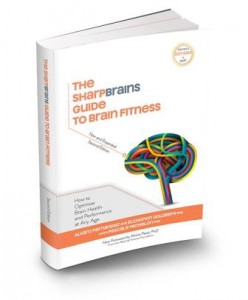
amazon_kindleAs a book co-author it is always a pleasure, and a surprise, to see what readers find most interesting and noteworthy. A feature in Amazon's Kindle e-reader allows readers to highlight and share their favorite sentences .

These are the 5 Most Highlighted Quotes in The SharpBrains Guide to Brain Fitness: How to Optimize Brain Health and Performance at Any Age (so far):

  1. "Emotion is the system that tells us how important something is. Attention focuses us on the important and away from the unimportant things. Cognition tells us what to do about it. Cognitive skills are whatever it takes to do those things." (25 Highlighters)
  2. "Working memory is the type of memory that allows us to both hold information in mind and work on it as needed." (22 Highlighters)
  3. "First, the more a network of neurons is activated (i.e., the more often the neurons fire together), the stronger the connections become." (21 Highlighters)
  4. "Since human attention is limited, trying to divide it between too many tasks necessarily results in performance errors." (17 Highlighters)
  5. "Controlling and managing emotion (including stress and anger) is crucial for performing successfully in anything." (17 Highlighters)

–> You can nowSharpBrainsGuide_3D_compressed Read the Book's Introduction and First Chapter Free

How to Order the Book (as paperback or e-book):

  • In the US, click Here
  • Outside the US, click Here

We hope you find it as stimulating to read as it was for us to write!


Thursday, June 13, 2013

Journal Alert - INTELLIGENCE

Title:
> Convergent and divergent validity of integrative versus mixed model measures of emotional intelligence
>
> Authors:
> Webb, CA; Schwab, ZJ; Weber, M; DelDonno, S; Kipman, M; Weiner, MR;
> Killgore, WDS
>
> Source:
> *INTELLIGENCE*, 41 (3):149-156; MAY-JUN 2013
>
> Abstract:
> The construct of emotional intelligence (EI) has garnered increased
> attention in the popular media and scientific literature. Several
> competing measures of El have been developed, including self-report and
> performance-based instruments. The current study replicates and expands
> on previous research by examining three competing El measures
> (Mayer-Salovey-Caruso Emotional Intelligence Test, MSCEIT; Bar-On
> Emotion Quotient Inventory, EQ-i; and Self-Rated Emotional Intelligence
> Scale, SREIS) and their relationships with cognitive functioning
> (Wechsler Abbreviated Scale of Intelligence; WASI), Big Five personality
> traits (NEO-PI-R) and emotional well-being (Beck Depression Inventory,
> BDI and Positive and Negative Affect Schedule, PANAS). Results indicated
> that significant variability in the self-report El measures was
> accounted for by personality and emotional well-being measures, whereas
> the MSCEIT was more strongly associated with IQ. Overall, nearly
> two-thirds (62%) of the variance in EQ-i scores was accounted for by Big
> Five personality traits, emotional well-being and full scale IQ; whereas
> only 14% of the variance in MSCEIT scores was accounted for by these
> same variables. The present findings raise questions regarding the
> divergent validity of self-report El measures from existing personality
> and emotional well-being measures. The implication of these results and
> directions for future research are discussed. (c) 2013 Elsevier Inc. All
> rights reserved.
>
> ========================================================================
>
>
> *Pages: 157-168 (Article)
> *View Full Record: http://gateway.webofknowledge.com/gateway/Gateway.cgi?GWVersion=2&SrcAuth=Alerting&SrcApp=Alerting&DestApp=CCC&DestLinkType=FullRecord;KeyUT=CCC:000318833500002
> *Order Full Text [ ]
>
> Title:
> Explanatory item response modeling of children's change on a dynamic test of analogical reasoning
>
> Authors:
> Stevenson, CE; Hickendorff, M; Resing, WCM; Heiser, WJ; de Boeck, PAL
>
> Source:
> *INTELLIGENCE*, 41 (3):157-168; MAY-JUN 2013
>
> Abstract:
> Dynamic testing is an assessment method in which training is
> incorporated into the procedure with the aim of gauging cognitive
> potential. Large individual differences are present in children's
> ability to profit from training in analogical reasoning. The aim of this
> experiment was to investigate sources of these differences on a dynamic
> test of figural matrix analogies. School children (N = 252, M = 7 years,
> SD = 11 months, range 5-9 years) were dynamically tested using a
> pretest-training-posttest design. The children were randomly allocated
> to a training condition: graduated prompts (N = 127) or feedback (N =
> 123). All children were presented with figural analogies without help or
> feedback during the pretest. The children were trained to solve
> analogies with either graduated prompts, a form of step-wise elaborated
> feedback in which increasingly detailed instruction is provided on how
> to solve the task, or feedback, in which only correctness of each
> solution was provided. A comparable figural analogies test was
> administered during the posttest measure. Explanatory IRT models were
> used to investigate sources of individual differences in initial ability
> and improvement after training. We found that visual and verbal working
> memory and age-group were related to initial ability. Improvement after
> training was influenced by training-type, whereby graduated prompts
> trained children improved more than feedback-trained, but also by
> initial ability, where children with lower initial scores improved more
> in both groups. Furthermore, there was an additive effect of math
> achievement on degree of improvement; where higher achieving children
> improved more from pretest to posttest. Potential to learn as measured
> by dynamic tests is not often included in traditional cognitive
> assessment. However, learning potential does appear to be an important
> construct to include in psychoeducational testing. (c) 2013 Elsevier
> Inc. All rights reserved.
>
> ========================================================================
>
>
> *Pages: 169-177 (Article)
> *View Full Record: http://gateway.webofknowledge.com/gateway/Gateway.cgi?GWVersion=2&SrcAuth=Alerting&SrcApp=Alerting&DestApp=CCC&DestLinkType=FullRecord;KeyUT=CCC:000318833500003
> *Order Full Text [ ]
>
> Title:
> The Flynn effect and population aging
>
> Authors:
> Skirbekk, V; Stonawski, M; Bonsang, E; Staudinger, UM
>
> Source:
> *INTELLIGENCE*, 41 (3):169-177; MAY-JUN 2013
>
> Abstract:
> Although lifespan changes in cognitive performance and Flynn effects
> have both been well documented, there has been little scientific focus
> to date on the net effect of these forces on cognition at the population
> level. Two major questions moving beyond this finding guided this study:
> (1) Does the Flynn effect indeed continue in the 2000s for older adults
> in a UK dataset (considering immediate recall, delayed recall, and
> verbal fluency)? (2) What are the net effects of population aging and
> cohort replacement on average cognitive level in the population for the
> abilities under consideration?
> First, in line with the Flynn effect, we demonstrated continued
> cognitive improvements among successive cohorts of older adults. Second,
> projections based on different scenarios for cognitive cohort changes as
> well as demographic trends show that if the Flynn effect observed in
> recent years continues, it would offset the corresponding age-related
> cognitive decline for the cognitive abilities studied. In fact, if
> observed cohort effects should continue, our projections show
> improvements in cognitive functioning on a population level until
> 2042-in spite of population aging. (c) 2013 Elsevier Inc. All rights
> reserved.
>
> ========================================================================
>
>
> *Pages: 178-180 (Editorial Material)
> *View Full Record: http://gateway.webofknowledge.com/gateway/Gateway.cgi?GWVersion=2&SrcAuth=Alerting&SrcApp=Alerting&DestApp=CCC&DestLinkType=FullRecord;KeyUT=CCC:000318833500004
> *Order Full Text [ ]
>
> Title:
> FLynn effect in Turkey: A comment on Kagitcibasi and Biricik (2011)
>
> Authors:
> Rindermann, H; Schott, T; Baumeister, AEE
>
> Source:
> *INTELLIGENCE*, 41 (3):178-180; MAY-JUN 2013
>
> Abstract:
> Kagitcibasi and Biricik (2011) presented generational IQ gains for
> Turkey on the Goodenough Draw-a-Man test (Draw-a-Person). Following
> their results (their Table 1) the mean IQ gain from 1977 to 2010 (33
> years) across three different population groups was 5.24 IQ (per decade
> dec = 1.59 IQ points). However, Kagitcibasi and Biricik did not
> acknowledge the changing social composition of society: the share of
> groups which had a lower IQ in 1977 and 2010 decreased, and the share of
> groups which had a higher IQ in 1977 and 2010 increased. Considering
> this, we came to an estimate of dec = 3.52 IQ points for the FLynn
> effect in Turkey over the past decades. (c) 2013 Elsevier Inc. All
> rights reserved.
>
> ========================================================================
>
>
> *Pages: 181-192 (Article)
> *View Full Record: http://gateway.webofknowledge.com/gateway/Gateway.cgi?GWVersion=2&SrcAuth=Alerting&SrcApp=Alerting&DestApp=CCC&DestLinkType=FullRecord;KeyUT=CCC:000318833500005
> *Order Full Text [ ]
>
> Title:
> Quantitative differences in retest effects across different methods used to construct alternate test forms
>
> Authors:
> Arendasy, ME; Sommer, M
>
> Source:
> *INTELLIGENCE*, 41 (3):181-192; MAY-JUN 2013
>
> Abstract:
> Allowing respondents to retake a cognitive ability test has shown to
> increase their test scores. Several theoretical models have been
> proposed to explain this effect, which make distinct assumptions
> regarding the measurement invariance of psychometric tests across test
> administration sessions with regard to narrower cognitive abilities and
> general mental ability. We modeled retest effects in four psychometric
> tests as a function of specific retest form and general mental ability
> in order to compare the validity of these models and their
> generalizability across three different kinds of retest forms. To do so
> automatic item generation was used to construct two kinds of alternate
> retest: (1) isomorphic retests and (2) psychometrically matched retests.
> A total of N = 358 respondents completed all four measures twice,
> receiving either identical retest forms, isomorphic retest forms or
> psychometrically matched retest forms at the second test administration
> session. Item response theory modeling supported strict measurement
> invariance across all test forms and time-points of measurement but
> indicated variation in respondents' retest score gains due to individual
> differences in general mental ability and the kind of retest form used.
> In general, retest effects were more pronounced for high-g respondents,
> identical retests and isomorphic retest forms and for mental rotation
> and algebra word problems. Latent mean and covariance structure analyses
> indicated that retesting did not affect the g-factor saturation of the
> four cognitive ability tests but revealed that retest score gains were
> hollow with respect to psychometric g. (c) 2013 Elsevier Inc. All rights
> reserved.
>
> ========================================================================
>
>
> *Pages: 193-202 (Article)
> *View Full Record: http://gateway.webofknowledge.com/gateway/Gateway.cgi?GWVersion=2&SrcAuth=Alerting&SrcApp=Alerting&DestApp=CCC&DestLinkType=FullRecord;KeyUT=CCC:000318833500006
> *Order Full Text [ ]
>
> Title:
> Allocation of talent in society and its effect on economic development
>
> Authors:
> Strenze, T
>
> Source:
> *INTELLIGENCE*, 41 (3):193-202; MAY-JUN 2013
>
> Abstract:
> Several studies in psychology and economics have demonstrated that the
> average cognitive ability (talent) of people living in a society affects
> the economic development of the society. There is, however, reason to
> expect that the economic development of societies depends not just on
> the average level of talent but also on the allocation of talent in
> society - societies that allocate people with different talents more
> efficiently should be more successful in economic terms. Efficient
> allocation of talent means that people with higher ability do jobs of
> higher complexity. The present paper constructed several measures of
> allocation of talent and analyzed their effect on the economic growth
> rate of countries and U.S. states. Overall, the analyses support the
> idea that the countries and states that have a better allocation of
> talent exhibit higher levels of economic growth. (c) 2013 Elsevier Inc.
> All rights reserved.
>
>

Article: Are we intelligent about developing human intelligence?


*

Wednesday, June 12, 2013

Sunday, June 02, 2013

Another article implicating dlPFC and P-FIT model of intelligence--Importance to general intelligence

Another study implicating dorsolateral prefrontal cortex (dlPFC) and PFIT model of intelligence with regard to general intelligence (g), working memory and white matter tract-moderated functional brain network connectivity. Supports significant components of the three-level explanatory model articulated in MindHub Pub #2.


Article: Workshop on IRT, CAT and testing in the on-line environment


Workshop on IRT, CAT and testing in the on-line environment
http://www.psychometrics.cam.ac.uk/page/311/concerto-three-day-workshop.htm

Sent via Flipboard


Friday, May 31, 2013

Article: INTELLECTUAL DISABILITY: Georgia Inmate Appeals Intellectual Disability Claim to U.S. Supreme Court


INTELLECTUAL DISABILITY: Georgia Inmate Appeals Intellectual Disability Claim to U.S. Supreme Court
http://deathpenaltyinfo.org/intellectual-disability-georgia-inmate-appeals-intellectual-disability-claim-us-supreme-court

Sent via Flipboard


*******************************************
Kevin McGrew, PhD
Educational Psychologist
Director, IAP
*******************************************

Thursday, May 30, 2013

Special journal issue on the teenage brain

> Journal Name: CURRENT DIRECTIONS IN PSYCHOLOGICAL SCIENCE (ISSN: 0963-7214)
> Issue: Vol. 22 No. 2, 2013
> IDS#: 136HW
> Alert Expires: 10 JAN 2014
> Number of Articles in Issue: 15 (15 included in this e-mail)
> Organization ID: c4f3d919329a46768459d3e35b8102e6
> ========================================================================

> Note: Instructions on how to purchase the full text of an article and Thomson Reuters Science Contact information are at the end of the e-mail.
> ========================================================================
>
>
> *Pages: 79-79 (Editorial Material)
> *View Full Record: http://gateway.webofknowledge.com/gateway/Gateway.cgi?GWVersion=2&SrcAuth=Alerting&SrcApp=Alerting&DestApp=CCC&DestLinkType=FullRecord;KeyUT=CCC:000318354000001
> *Order Full Text [ ]
>
> Title:
> Introduction to Special Issue on the Teenage Brain
>
> Authors:
> Engle, RW
>
> Source:
> *CURRENT DIRECTIONS IN PSYCHOLOGICAL SCIENCE*, 22 (2):79-79; SI APR 2013
>
> ========================================================================
>
>
> *Pages: 80-81 (Editorial Material)
> *View Full Record: http://gateway.webofknowledge.com/gateway/Gateway.cgi?GWVersion=2&SrcAuth=Alerting&SrcApp=Alerting&DestApp=CCC&DestLinkType=FullRecord;KeyUT=CCC:000318354000002
> *Order Full Text [ ]
>
> Title:
> The Teenage Brain: An Overview
>
> Authors:
> Casey, BJ
>
> Source:
> *CURRENT DIRECTIONS IN PSYCHOLOGICAL SCIENCE*, 22 (2):80-81; SI APR 2013
>
> ========================================================================
>
>
> *Pages: 82-87 (Article)
> *View Full Record: http://gateway.webofknowledge.com/gateway/Gateway.cgi?GWVersion=2&SrcAuth=Alerting&SrcApp=Alerting&DestApp=CCC&DestLinkType=FullRecord;KeyUT=CCC:000318354000003
> *Order Full Text [ ]
>
> Title:
> The Teenage Brain: Self Control
>
> Authors:
> Casey, BJ; Caudle, K
>
> Source:
> *CURRENT DIRECTIONS IN PSYCHOLOGICAL SCIENCE*, 22 (2):82-87; SI APR 2013
>
> Abstract:
> Adolescence refers to the transition from childhood to adulthood that
> begins with the onset of puberty and ends with successful independence
> from the parent. A paradox for human adolescence is why, during a time
> when the individual is probably faster, stronger, of higher reasoning
> capacity, and more resistant to disease, there is such an increase in
> mortality relative to childhood. This is due not to disease but, rather,
> to preventable forms of death (accidental fatalities, suicide, and
> homicide) associated with adolescents putting themselves in harm's way,
> in part because of diminished self-control-the ability to suppress
> inappropriate emotions, desires, and actions. This article highlights
> how self-control varies as a function of age, context, and the
> individual and delineates its neurobiological basis.
>
> ========================================================================
>
>
> *Pages: 88-93 (Article)
> *View Full Record: http://gateway.webofknowledge.com/gateway/Gateway.cgi?GWVersion=2&SrcAuth=Alerting&SrcApp=Alerting&DestApp=CCC&DestLinkType=FullRecord;KeyUT=CCC:000318354000004
> *Order Full Text [ ]
>
> Title:
> The Teenage Brain: Sensitivity to Rewards
>
> Authors:
> Galvan, A
>
> Source:
> *CURRENT DIRECTIONS IN PSYCHOLOGICAL SCIENCE*, 22 (2):88-93; SI APR 2013
>
> Abstract:
> Adolescence is characterized by heightened reward sensitivity.
> Accumulating evidence suggests that this behavior is associated with
> neurodevelopmental changes in reward-related neural circuitry. In this
> article, I review recent studies in animal models and humans that
> highlight the unique adolescent response to reward in the striatum, a
> reward-sensitive brain region. This work helps the field understand
> characteristic adolescent behavior and will be important in addressing
> policy questions related to this period of development.
>
> ========================================================================
>
>
> *Pages: 94-100 (Article)
> *View Full Record: http://gateway.webofknowledge.com/gateway/Gateway.cgi?GWVersion=2&SrcAuth=Alerting&SrcApp=Alerting&DestApp=CCC&DestLinkType=FullRecord;KeyUT=CCC:000318354000005
> *Order Full Text [ ]
>
> Title:
> The Teenage Brain: Cognitive Control and Motivation
>
> Authors:
> Luna, B; Paulsen, DJ; Padmanabhan, A; Geier, C
>
> Source:
> *CURRENT DIRECTIONS IN PSYCHOLOGICAL SCIENCE*, 22 (2):94-100; SI APR 2013
>
> Abstract:
> Adolescence is associated with heightened mortality rates due in large
> measure to negative consequences from risky behaviors. Theories of
> adolescent risk taking posit that it is driven by immature cognitive
> control coupled with heightened reward reactivity, yet surprisingly few
> empirical studies have examined these neurobiological systems together.
> In this article, we describe a series of studies from our laboratory
> aimed at further delineating the maturation of cognitive control through
> adolescence, as well as how rewards influence a key aspect of cognitive
> control: response inhibition. Our findings indicate that adolescents can
> exert adult-like control over their behavior but that they have
> limitations regarding the consistency with which they can generate
> optimal responses compared with adults. Moreover, we demonstrate that
> the brain circuitry supporting mature cognitive (inhibitory) control is
> still undergoing development. Our work using the rewarded antisaccade
> task, a paradigm that enables concurrent assessment of rewards and
> inhibitory control, indicates that adolescents show delayed but
> heightened responses in key reward regions along with concurrent
> activation in brain systems that support behaviors leading to reward
> acquisition. Considered together, our results highlight
> adolescent-specific differences in the integration of basic brain
> processes that may underlie decision making and more complex risk taking
> in adolescence.
>
> ========================================================================
>
>
> *Pages: 101-107 (Article)
> *View Full Record: http://gateway.webofknowledge.com/gateway/Gateway.cgi?GWVersion=2&SrcAuth=Alerting&SrcApp=Alerting&DestApp=CCC&DestLinkType=FullRecord;KeyUT=CCC:000318354000006
> *Order Full Text [ ]
>
> Title:
> The Teenage Brain: Functional Connectivity
>
> Authors:
> Dosenbach, NUF; Petersen, SE; Schlaggar, BL
>
> Source:
> *CURRENT DIRECTIONS IN PSYCHOLOGICAL SCIENCE*, 22 (2):101-107; SI APR 2013
>
> Abstract:
> Distant brain regions are organized into large-scale functional networks
> specialized for specific cognitive processes. The brain's
> functional-network architecture and its development can be investigated
> using functional connectivity MRI (fcMRI), which measures correlations
> in spontaneous fluctuations of brain activity. fcMRI studies have
> provided important insights into typical brain organization and
> development, as well as insights into the atypical organization of the
> brain in neuropsychiatric disorders. fcMRI data can be easily collected
> and carry much information. Therefore, they are now being analyzed using
> powerful multivariate-pattern-analysis (MVPA) methods, with the goal of
> one day being able to diagnose disease states in individuals. However,
> great care must be taken during these analyses to eliminate confounds
> such as head movement.
>
> ========================================================================
>
>
> *Pages: 108-113 (Article)
> *View Full Record: http://gateway.webofknowledge.com/gateway/Gateway.cgi?GWVersion=2&SrcAuth=Alerting&SrcApp=Alerting&DestApp=CCC&DestLinkType=FullRecord;KeyUT=CCC:000318354000007
> *Order Full Text [ ]
>
> Title:
> The Teenage Brain: A Neuroeconomic Approach to Adolescent Decision Making
>
> Authors:
> Van Duijvenvoorde, ACK; Crone, EA
>
> Source:
> *CURRENT DIRECTIONS IN PSYCHOLOGICAL SCIENCE*, 22 (2):108-113; SI APR 2013
>
> Abstract:
> Recent neuroscientific studies have pinpointed a relative imbalance
> between the development of subcortical-affective and prefrontal-control
> brain networks that creates specific sensitivities during adolescence.
> Despite these advances in understanding adolescent brain development,
> there is a strong need for a more mechanistic understanding of the way
> these limbic and frontal-cortical areas interact and contribute to
> adolescents' risky and social decision-making. We discuss a
> neuroeconomic approach that has the potential to significantly forward
> the understanding of decision making in adolescence.
>
> ========================================================================
>
>
> *Pages: 114-120 (Article)
> *View Full Record: http://gateway.webofknowledge.com/gateway/Gateway.cgi?GWVersion=2&SrcAuth=Alerting&SrcApp=Alerting&DestApp=CCC&DestLinkType=FullRecord;KeyUT=CCC:000318354000008
> *Order Full Text [ ]
>
> Title:
> The Teenage Brain: Peer Influences on Adolescent Decision Making
>
> Authors:
> Albert, D; Chein, J; Steinberg, L
>
> Source:
> *CURRENT DIRECTIONS IN PSYCHOLOGICAL SCIENCE*, 22 (2):114-120; SI APR 2013
>
> Abstract:
> Research efforts to account for elevated risk behavior among adolescents
> have arrived at an exciting new stage. Moving beyond laboratory studies
> of age differences in risk perception and reasoning, new approaches have
> shifted their focus to the influence of social and emotional factors on
> adolescent decision making. We review recent research suggesting that
> adolescent risk-taking propensity derives in part from a maturational
> gap between early adolescent remodeling of the brain's socioemotional
> reward system and a gradual, prolonged strengthening of the
> cognitive-control system. Research has suggested that in adolescence, a
> time when individuals spend an increasing amount of time with their
> peers, peer-related stimuli may sensitize the reward system to respond
> to the reward value of risky behavior. As the cognitive-control system
> gradually matures over the course of the teenage years, adolescents grow
> in their capacity to coordinate affect and cognition and to exercise
> self-regulation, even in emotionally arousing situations. These
> capacities are reflected in gradual growth in the capacity to resist
> peer influence.
>
> ========================================================================
>
>
> *Pages: 121-127 (Article)
> *View Full Record: http://gateway.webofknowledge.com/gateway/Gateway.cgi?GWVersion=2&SrcAuth=Alerting&SrcApp=Alerting&DestApp=CCC&DestLinkType=FullRecord;KeyUT=CCC:000318354000009
> *Order Full Text [ ]
>
> Title:
> The Teenage Brain: Sensitivity to Social Evaluation
>
> Authors:
> Somerville, LH
>
> Source:
> *CURRENT DIRECTIONS IN PSYCHOLOGICAL SCIENCE*, 22 (2):121-127; SI APR 2013
>
> Abstract:
> Relative to childhood, peer relationships take on a heightened
> importance during adolescence. Might adolescents be highly attuned to
> information that concerns when and how they are being evaluated and what
> their peers think of them? This review evaluates how continuing brain
> development-which influences brain function-partially explains and
> reflects adolescents' attunement to social evaluation. Though
> preliminary, evidence is mounting to suggest that while processing
> information relevant to social evaluation and the internal states of
> other people, adolescents respond with heightened emotional intensity
> and corresponding nonlinear recruitment of socioaffective brain
> circuitry. This review highlights research findings that relate
> trajectories of brain development to social behavior and discusses
> promising avenues of future research that will inform how brain
> development might lead adolescents to be sensitized to social
> evaluation.
>
> ========================================================================
>
>
> *Pages: 128-133 (Article)
> *View Full Record: http://gateway.webofknowledge.com/gateway/Gateway.cgi?GWVersion=2&SrcAuth=Alerting&SrcApp=Alerting&DestApp=CCC&DestLinkType=FullRecord;KeyUT=CCC:000318354000010
> *Order Full Text [ ]
>
> Title:
> The Teenage Brain: Social Reorientation and the Adolescent Brain-The Role of Gonadal Hormones in the Male Syrian Hamster
>
> Authors:
> De Lorme, K; Bell, MR; Sisk, CL
>
> Source:
> *CURRENT DIRECTIONS IN PSYCHOLOGICAL SCIENCE*, 22 (2):128-133; SI APR 2013
>
> Abstract:
> Maturation of social cognition and a gain in social proficiency are
> universal aspects of adolescent development that prepare individuals for
> adulthood. Social cognition involves the perception and interpretation
> of social cues, followed by the generation of a behavioral response.
> Social proficiency is acquired through the ability to make behavioral
> adaptations as one learns from social experience; increased social
> proficiency facilitates successful social interactions. In males, the
> neuroendocrine bases of these developmental changes involve both
> activational and organizational influences of testicular hormones. Using
> the male Syrian hamster as a model, this review provides evidence that
> social stimuli acquire rewarding properties during adolescence via
> activational effects of pubertal testosterone, whereas the adolescent
> gain in social proficiency depends on organizational actions of pubertal
> testosterone.
>
> ========================================================================
>
>
> *Pages: 134-139 (Article)
> *View Full Record: http://gateway.webofknowledge.com/gateway/Gateway.cgi?GWVersion=2&SrcAuth=Alerting&SrcApp=Alerting&DestApp=CCC&DestLinkType=FullRecord;KeyUT=CCC:000318354000011
> *Order Full Text [ ]
>
> Title:
> The Teenage Brain: Surging Hormones-Brain-Behavior Interactions During Puberty
>
> Authors:
> Peper, JS; Dahl, RE
>
> Source:
> *CURRENT DIRECTIONS IN PSYCHOLOGICAL SCIENCE*, 22 (2):134-139; SI APR 2013
>
> Abstract:
> In this paper, we discuss the surging hormones of puberty and their
> influences on adolescent behavior. We describe why these issues
> represent an interesting and important area of investigation,
> emphasizing their contributions to a specific set of developmental
> processes at the heart of the transition from childhood to adolescence.
> We briefly review the neuroendocrine underpinnings of human puberty. Our
> review focuses on evidence for behavioral (and neurobehavioral) effects
> of gonadal hormones and emphasizes the social and affective dimensions
> of these hormonal effects. More broadly, we consider how these hormonal
> events contribute to brain-behavior interactions that can bias early
> adolescent trajectories in both positive and negative directions, and in
> ways that may begin as small influences but can spiral into large-scale
> effects over time. These influences also appear to play an important
> role in functional and structural brain development during adolescence.
> Finally, we offer some thoughts on directions for future research in
> these areas.
>
> ========================================================================
>
>
> *Pages: 140-145 (Article)
> *View Full Record: http://gateway.webofknowledge.com/gateway/Gateway.cgi?GWVersion=2&SrcAuth=Alerting&SrcApp=Alerting&DestApp=CCC&DestLinkType=FullRecord;KeyUT=CCC:000318354000012
> *Order Full Text [ ]
>
> Title:
> The Teenage Brain: The Stress Response and the Adolescent Brain
>
> Authors:
> Romeo, RD
>
> Source:
> *CURRENT DIRECTIONS IN PSYCHOLOGICAL SCIENCE*, 22 (2):140-145; SI APR 2013
>
> Abstract:
> Adolescence is a time of many psychosocial and physiological changes.
> One such change is how an individual responds to stressors.
> Specifically, adolescence is marked by significant shifts in
> hypothalamic-pituitary-adrenal (HPA) axis reactivity, resulting in
> heightened stress-induced hormonal responses. It is presently unclear
> what mediates these changes in stress reactivity and what impacts they
> may have on an adolescent individual. However, stress-sensitive limbic
> and cortical brain areas that continue to mature during adolescence may
> be particularly vulnerable to these shifts in responsiveness.
> Consequently, perturbations of the maturing adolescent brain may
> contribute to the increase in stress-related psychological dysfunctions,
> such as anxiety, depression, and drug abuse, often observed during this
> stage of development. The purpose of this review is to describe the
> changes that occur in HPA function during adolescence, as well as to
> briefly discuss the possible ramifications of these changes on the
> developing brain and psychological health.
>
> ========================================================================
>
>
> *Pages: 146-151 (Article)
> *View Full Record: http://gateway.webofknowledge.com/gateway/Gateway.cgi?GWVersion=2&SrcAuth=Alerting&SrcApp=Alerting&DestApp=CCC&DestLinkType=FullRecord;KeyUT=CCC:000318354000013
> *Order Full Text [ ]
>
> Title:
> The Teenage Brain: Altered Fear in Humans and Mice
>
> Authors:
> Pattwell, SS; Casey, BJ; Lee, FS
>
> Source:
> *CURRENT DIRECTIONS IN PSYCHOLOGICAL SCIENCE*, 22 (2):146-151; SI APR 2013
>
> Abstract:
> Fear learning is an adaptive, evolutionarily conserved process that
> allows people to respond appropriately to threats in the environment.
> These threats can vary across different contexts and across the life
> course. Taking into account the high degree of neural and behavioral
> conservation across species in fear regulation and its underlying neural
> circuitry, we examined how fear learning changes across contexts and
> over the course of development, focusing specifically on the
> environmentally changing and challenging period of adolescence. We show
> two surprising developmental findings specific to adolescents, relative
> to older and younger individuals: (a) diminished fear to previously
> aversive contexts and (b) heightened fear to previously aversive cues.
> These behavioral changes are paralleled by developmental changes in
> frontolimbic circuitry. We discuss how these evolutionarily conserved
> mechanisms may be essential to survival of the species, given the
> changing environmental demands (social, sexual, and physical) of
> adolescence. Our findings also have important implications for
> unremitting forms of fear at the core of anxiety-related disorders,
> which peak during adolescence, and for when during development specific
> treatments for these disorders may be most effective.
>
> ========================================================================
>
>
> *Pages: 152-157 (Article)
> *View Full Record: http://gateway.webofknowledge.com/gateway/Gateway.cgi?GWVersion=2&SrcAuth=Alerting&SrcApp=Alerting&DestApp=CCC&DestLinkType=FullRecord;KeyUT=CCC:000318354000014
> *Order Full Text [ ]
>
> Title:
> The Teenage Brain: Adolescents and Alcohol
>
> Authors:
> Spear, L
>
> Source:
> *CURRENT DIRECTIONS IN PSYCHOLOGICAL SCIENCE*, 22 (2):152-157; SI APR 2013
>
> Abstract:
> The high levels of alcohol consumption characteristic of adolescence may
> be in part biologically based, given that elevated consumption levels
> are evident during this developmental transition in other mammalian
> species as well. Studies conducted using a simple animal model of
> adolescence in the rat have shown adolescents to be more sensitive than
> adults to social facilitatory and rewarding effects of alcohol but less
> sensitive to numerous alcohol effects that may serve as cues to limit
> intake. These age-specific alcohol sensitivities appear related to
> differential rates of development of neural systems underlying different
> alcohol effects, as well as to an ontogenetic decline in rapid brain
> compensations to alcohol, termed acute tolerance. In contrast, these
> adolescent-typical sensitivities to alcohol do not appear to be notably
> influenced by pubertal increases in gonadal hormones. Although data are
> sparse, there are hints that similar alcohol sensitivities may be seen
> in human adolescents, with this developmentally decreased sensitivity to
> alcohol's intoxicating effects possibly exacerbated by genetic
> vulnerabilities also characterized by an insensitivity to alcohol
> intoxication, thereby perhaps permitting especially high levels of
> alcohol consumption among vulnerable youths.
>
> ========================================================================
>
>
> *Pages: 158-161 (Article)
> *View Full Record: http://gateway.webofknowledge.com/gateway/Gateway.cgi?GWVersion=2&SrcAuth=Alerting&SrcApp=Alerting&DestApp=CCC&DestLinkType=FullRecord;KeyUT=CCC:000318354000015
> *Order Full Text [ ]
>
> Title:
> The Teenage Brain: Adolescent Brain Research and the Law
>
> Authors:
> Bonnie, RJ; Scott, ES
>
> Source:
> *CURRENT DIRECTIONS IN PSYCHOLOGICAL SCIENCE*, 22 (2):158-161; SI APR 2013
>
> Abstract:
> In this article, we explore the emerging and potential influence of
> adolescent brain science on law and public policy. The primary
> importance of this research is in policy domains that implicate
> adolescent risk taking; these include drug and alcohol use, driver
> licensing, and criminal justice. We describe the emerging importance of
> brain science in the Supreme Court and other policy arenas. Finally, we
> argue that current research cannot contribute usefully to legal
> decisions about individual adolescents and should not be used in
> criminal trials at the present time, except to provide general
> developmental information.
>
> ========================================================================
> *Order Full Text*
> All Customers
> --------------
> Please contact your library administrator, or person(s) responsible for
> document delivery, to find out more about your organization.s policy for
> obtaining the full text of the above articles. If your organization does not
> have a current document delivery provider, you can order the document from our
> document delivery service TS Doc. To order a copy of the article(s) you wish
> to receive, please go to www.contentscm.com and enter the citation information for
> each document. A price quote for each item will be given and you will need a
> credit card to complete your order request.
>
> TS Doc Customers
> --------------
> TS Doc customers can purchase the full text of an article using their
> TS Doc account. Go to www.contentscm.com and login using your TS Doc logon ID
> and password. Copy & paste the citation into the parser (Order by Citation)
> or enter the citation information above on the web order form (Order by Form.)
> A quote will be given for each item and your company will be invoiced as
> specified in your TS Doc agreement.
>
>
> If you would like to supply contact information for TS Doc, here is the updated info:
> Product name: TS Doc
> Customer Service: customerservice@infotrieve.com or (800) 603-4367
>
>
> ========================================================================
> *Support Contact Information*
> If you have any questions, please open a support ticket at http://ip-science.thomsonreuters.com/techsupport/.
> Telephone numbers for your local support team are also available here.
> ========================================================================