Friday, December 24, 2010

Test your Reaction Time

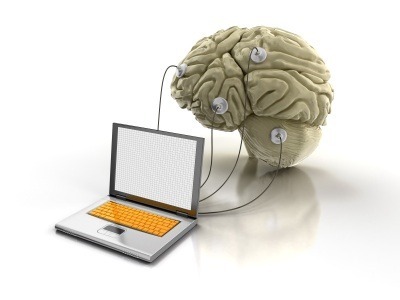
Reaction time is the time it takes to react to something. It can be considered as an index of your speed of processing: It shows how fast you can execute the mental operations needed by the task at hand.

Reaction Time is a basic measure used in many psychology studies. Participant are most often asked to push a button when done with the task, which can be as varied as detecting an object, memorizing a word, or identifying an emotion. As brain processing is quite fast, reaction times are usually measured in milliseconds (a thousandth (1/1000) of a second).

What is your average Reaction Time? Ready to try? Click here to start. Fun twist: Try before and after your Christmas dinner!

Merry Christmas from the SharpBrains Team


Sent with MobileRSS HD


Sent from Kevin McGrew's iPad
Kevin McGrew, PhD
Educational Psychologist

Happy holidays from the blogmaster from IAP


FROM THE BLOGMASTER AT:


- iPost using BlogPress from my Kevin McGrew's iPad

Thursday, December 23, 2010

Genetic cause of severe impulsivity?@PsyPost, 12/23/10 3:09 PM

PsyPost.org (@PsyPost)
12/23/10 3:09 PM
Genetic variant that can lead to severe impulsivity identified: A multinational research team led by scientists ... http://bit.ly/gjcyWq


Sent from Kevin McGrew's iPad
Kevin McGrew, PhD
Educational Psychologist

New cognitive development book@psypress, 12/23/10 3:32 AM

Psychology Press (@psypress)
12/23/10 3:32 AM
Just published! Understanding children's #cognitive #development through the lens of #memory research http://goo.gl/p8ic8


Sent from Kevin McGrew's iPad
Kevin McGrew, PhD
Educational Psychologist

Tuesday, December 21, 2010

iPost. And more free online articles@psypress, 12/21/10 8:40 AM

Psychology Press (@psypress)
12/21/10 8:40 AM
Who's interested in the Cognitive Neuroscience of #Language? 2 free articles until 1 Jan 2011 http://goo.gl/8z1Q0


Sent from Kevin McGrew's iPad
Kevin McGrew, PhD
Educational Psychologist

iPost: free online articles@psypress, 12/21/10 3:29 AM

Psychology Press (@psypress)
12/21/10 3:29 AM
10 cog. & exp. #psychology articles to read from QJEP, Cognition & Emotion, Cognitive Neuropsychology jnls + more! http://goo.gl/fQfDU


Sent from Kevin McGrew's iPad
Kevin McGrew, PhD
Educational Psychologist

Sunday, December 19, 2010

IQ tests and theory trends: Google Ngram visualizations

This past week I read a very intriguing article in the New York Times about a new data visualization tool offered by Google-- the Google Books Ngram Viewer. I then ran across a legal blog post where someone had investigated trends in different law terms...and I couldn't help myself but to give it a try.

As described by Robert Ambrogi at the legal blog:

"Using data drawn from the millions of books it has digitized covering the years 1500 to 2008, it lets you see and compare the frequency of words and phrases as they were used in books over a span of years or centuries. As Google puts it: “The Ngram Viewer lets you graph and compare phrases from these datasets over time, showing how their usage has waxed and waned over the years.”

I first had to experiment with how the entered terms worked. The terms are case sensitive. I checked each phrase with a variety of permutations to maximum the "hit rate"...and then ran some phrases together to ascertain and compare trends.

Below are my results with a few comments--the data tend to speak for themselves. I found that most of what I searched for did not emerge until after 1940...so that is where each graph starts. It is also important to note that the graphs only go up thru 2008...it would be nice to see the graphs up today

Cool stuff. Double click on each graph to enlarge.


This chart suggests that the cognitive ability domains of Gv (Visual Processing), Ga (Auditory Processing), and Processing Speed (Gs) have become hotter topics than Gf (Fluid Intelligence), Gc (Crystallized Intelligence), Gsm (Short term Memory), and Glr (Long term Retrieval). Interesting.


One very clear observation. Among the non-Wechsler intelligence batteries, the Stanford Binet has dropped dramatically over time, while the "newbies" on the IQ testing block (WJ, DAS, KABC, CAS) have made been the focus of more writing since 1990. Note, "Wechsler Intelligence", when included, is the clear winner across time. I left it out so the trends for the "other" batteries would be more distinct.


As I have written about many times, contemporary Cattell-Horn-Carroll (CHC) intelligence theory has become the consensus theory of intelligence. This interesting graph supports this conclusion, especially from 1997 to 2008. Also, if one clicks on the search term in the summary table, one is taken to a page of the Google books that included the term. Click here to see example for CHC theory.

I think many of the trends noted above are due to emergence of Gf-Gc theory to CHC theory with the publication of the 1989 WJ-R. I've written about this critical theory-to-practice birth period here and here.

- iPost using BlogPress from my Kevin McGrew's iPad

Friday, December 17, 2010

Thursday, December 16, 2010

iPost: Announcing the 2011 SharpBrains Summit: 23 Confirmed Speakers

http://www.sharpbrains.com/blog/2010/12/16/announcing-the-2011-sharpbrains-summit-23-confirmed-speakers/?utm_source=rss&utm_medium=rss&utm_campaign=announcing-the-2011-sharpbrains-summit-23-confirmed-speakers


Sent from Kevin McGrew's iPad
Kevin McGrew, PhD
Educational Psychologist

Research bytes: Verbal ability and executive functioning in preschoolers

As per usual when I make a research byte/brief post, if anyone would like to read the original article, I can share via email---with the understanding that the article is provided in exchange for a brief guest post about it's contents. :) (contact me at iap@earthlink.net if interested). Also, if figure/images are included in the post, they can usually be made larger by clicking on the image.


- iPost using BlogPress from my Kevin McGrew's iPad

Wednesday, December 15, 2010

Institute for Applied Psychometrics (IAP) main office

[Note..images/pictures can be made larger by double clicking on the image]

Have made some recent changes in the home office of IAP. Here is an updated picture. One can never have enough screens active--there are five in total..can you find the fifth? Also, one can not work without a good big cup of strong coffee in a mug from the Directors favorite coffee house (second office)---Caribou coffee.

This is the g-factor of IAP and IQ's Corner, the ICDP, and the Tic Toc Brain Talk blogs.


- iPost using BlogPress from my Kevin McGrew's iPad

Tuesday, December 14, 2010

Research bytes: Cognitive employment testing--aging strategies--cognitive thresholds

Three interesting articles from one of my favorite journals--Current Directions in Psychological Science.

As per usual when I make a research byte/brief post, if anyone would like to read the original article, I can share via email---with the understanding that the article is provided in exchange for a brief guest post about it's contents. :) (contact me at iap@earthlink.net if interested). Also, if figure/images are included in the post, they can usually be made larger by clicking on the image.


- iPost using BlogPress from my Kevin McGrew's iPad


impost: Current Directions in Psychological Science Table of Contents for 1 December 2010; Vol. 19, No. 6


Subject: Current Directions in Psychological Science Table of Contents for 1 December 2010; Vol. 19, No. 6

Current Directions in Psychological Science Online Table of Contents Alert

A new issue of Current Directions in Psychological Science is available online:
1 December 2010; Vol. 19, No. 6

The below Table of Contents is available online at: http://cdp.sagepub.com/content/vol19/issue6/?etoc


Articles
Fact and Fiction in Cognitive Ability Testing for Admissions and Hiring Decisions
Nathan R. Kuncel and Sarah A. Hezlett
Curr Dir Psychol Sci 2010;19 339-345
http://cdp.sagepub.com/cgi/content/abstract/19/6/339

Beyond the Threshold Hypothesis: Even Among the Gifted and Top Math/Science Graduate Students, Cognitive Abilities, Vocational Interests, and Lifestyle Preferences Matter for Career Choice, Performance, and Persistence
Kimberley Ferriman Robertson, Stijn Smeets, David Lubinski, and Camilla P. Benbow
Curr Dir Psychol Sci 2010;19 346-351
http://cdp.sagepub.com/cgi/content/abstract/19/6/346

Emotion Regulation in Older Age
Heather L. Urry and James J. Gross
Curr Dir Psychol Sci 2010;19 352-357
http://cdp.sagepub.com/cgi/content/abstract/19/6/352

Pathways Linking Positive Emotion and Health in Later Life
Anthony D. Ong
Curr Dir Psychol Sci 2010;19 358-362
http://cdp.sagepub.com/cgi/content/abstract/19/6/358

Cognitive Strategy Variations During Aging
Patrick Lemaire
Curr Dir Psychol Sci 2010;19 363-369
http://cdp.sagepub.com/cgi/content/abstract/19/6/363

Alternative Avenues in the Assessment of Driving Capacities in Older Drivers and Implications for Training
Pierre-Luc Gamache, Carol Hudon, Normand Teasdale, and Martin Simoneau
Curr Dir Psychol Sci 2010;19 370-374
http://cdp.sagepub.com/cgi/content/abstract/19/6/370

Threat Perception Across the Life Span: Evidence for Multiple Converging Pathways
Vanessa LoBue, David H. Rakison, and Judy S. DeLoache
Curr Dir Psychol Sci 2010;19 375-379
http://cdp.sagepub.com/cgi/content/abstract/19/6/375

Propositions for the Study of Moral Personality Development
Patrick L. Hill and Brent W. Roberts
Curr Dir Psychol Sci 2010;19 380-383
http://cdp.sagepub.com/cgi/content/abstract/19/6/380

A New Look at Selective-Exposure Effects: An Integrative Model
Peter Fischer and Tobias Greitemeyer
Curr Dir Psychol Sci 2010;19 384-389
http://cdp.sagepub.com/cgi/content/abstract/19/6/384

Over the Hills and Far Away: The Link Between Physical Distance and Abstraction
Marlone D. Henderson and Cheryl J. Wakslak
Curr Dir Psychol Sci 2010;19 390-394
http://cdp.sagepub.com/cgi/content/abstract/19/6/390

Tobacco Dependence: Insights from Investigations of Self-Reported Motives
Thomas M. Piasecki, Megan E. Piper, and Timothy B. Baker
Curr Dir Psychol Sci 2010;19 395-401
http://cdp.sagepub.com/cgi/content/abstract/19/6/395

Gaining Insight Into the "Aha" Experience
Sascha Topolinski and Rolf Reber
Curr Dir Psychol Sci 2010;19 402-405
http://cdp.sagepub.com/cgi/content/abstract/19/6/402

Distress Tolerance: Theory, Measurement, and Relations to Psychopathology
Michael J. Zvolensky, Anka A. Vujanovic, Amit Bernstein, and Teresa Leyro
Curr Dir Psychol Sci 2010;19 406-410
http://cdp.sagepub.com/cgi/content/abstract/19/6/406


Sunday, December 12, 2010

Institute for Applied Psychometrics (IAP) new logo

The votes have been counted (at the IAP logo survey at IQ's Corner blog).  Thank you to all who took the time to vote and send comments.  There was a clear winner.  It is reproduced below....with a slight change in the placement of the bell curve.  And yes...there is a deliberate slight skew to the normal curve...it is more visually eye-catching than a perfect normal curve.  Over the next month I will be working to integrate the new logo in all critical IAP-related blogs and web pages.

Many thanks to my great son-in-law, Anthony, who did all the design work.  He does great work.  It is personal XMAS present to me...and it will be treasured for a long time.

IQs Corner Book Nook: Essentials of SLD identification & Human Intelligence

Just in time for the holidays. Two books to purchase for your family and friends---i.e., if they are interested in research on human intelligence and contemporary research and issues surrounding the identification of individuals with specific learning disabilities.

Within the past month I've received two free copies of the following books. I've only had time to thumb through them, so I cannot comment in detail about their strengths, limitations, etc. They are both placed on my ever increasing stack of "books to read when I have time." [Hint to publishers--the sooner you get these in e-pub format, especially for my iPad, the sooner I will likely fine time to read them :) ]


First is Human Intelligence by Earl "Buzz" Hunt. Dr. Hunt has a long resume in the field of human intelligence research. This appears to be a capstone summary of his take on human intelligence from his decades of scholarly study. No doubt I will eventually find it a useful primary reference resource book for many issues in the field of intelligence.


Next is the edited Essentials of Specific Learning Disability Identification. Dr. Dawn Flanagan and Dr. Vincent Alfonso (leaders and advocates of the "Cross-Battery" approach to cognitive assessment) edited this collection of diverse perspectives on how to identify SLD. I am impressed with the stable of authors who contributed chapters. They represent most of the big names within their respective cognitive and SLD research and theory sandboxes. I did skim the preface by Dr. Cecil Reynolds and know that I will also suffer some of the same cognitive dissonance he describes as the various authors present different methods for conceptualizing and operationalizing LD. This is not a criticism by Dr. Reynolds--just the astute conclusion that this book reflects that "state-of-the-art" of the research and thinking by many of the major players in the field of SLD...and as a result, there are differences in approaches. That being said, clearly this book appears to be an excellent source for those looking to capture the essence of where the field of SLD is---with all the various players and flavors.


- iPost using BlogPress from my Kevin McGrew's iPad

New intelligence test - social intelligence? Gullibility?

Saturday, December 11, 2010

Research byte: More on the "nose knows" - Go and cognition


I continue to be intrigued with the increasing research on the domain of Go.......I have posted a number of articles at my blog over the past five years (can be found by clicking on Go category label) that indicate that it is a separate cognitive domain and, more importantly, it has significant diagnostic potential for a wide array of cognitive disorders, esp. during the early stages of a disorder.

The nose knows :)

Cognitive factors in odor detection, odor discrimination, and odor identification tasks. Journal of Experimental and Clinical Neuropsycholgy, 32 (10), 1062–1067

Authors: Margareta Hednerab; Maria Larssonab; Nancy Arnoldc; Gesualdo M. Zuccod; Thomas Hummelc

Abstract

The purpose of this study was to determine cognitive correlates of olfactory performance across three different tasks. A total of 170 men and women (30-87 years of age) were assessed in olfactory sensitivity, discrimination, and identification. Also, participants were tested in a range of cognitive tests covering executive functioning, semantic memory, and episodic memory. Hierarchical regression analyses showed that proficiency in executive functioning and semantic memory contributed significantly to odor discrimination and identification performance, whereas all of the cognitive factors proved unrelated to performance in the odor threshold test. This pattern of outcome suggests that an individual's cognitive profile exerts a reliable influence on performance in higher order olfactory tasks.


- iPost using BlogPress from my Kevin McGrew's iPad