Over at one of my favorite "must read" blogs (Eide Neurolearning Blog) they have posted their list of top education stories for 2005. Worth a peak in case you missed some informative posts.
Technorati tags: education.

Intelligent Insights on Intelligence Theories and Tests
Saturday, December 31, 2005
Quote to note: W.C. Fields on "horse sense"
W. C. Fields
- "Horse sense is the thing a horse has which keeps it from betting on people."


Friday, December 30, 2005
GREAT neuroscience web resource - Neuroguide
 I just stumbled across a GREAT neuroscience resource on the web (Neuroguide). Check it out. A great searchable database and all kinds of links to useful resources. I shall be adding it to my blogroll.
Technorati tags: intelligence. cognition. brain. neuroscience.
Deja vu - does this fit somewhere in CHC theory?
Interesting post re: the history and current models of deju vu (Glr related?).
Technorati tags: CHC theory. psychology. intelligence. cognition. brain. neuroscience. deja vu. Glr. memory.
Technorati tags: CHC theory. psychology. intelligence. cognition. brain. neuroscience. deja vu. Glr. memory.
Gf and general intelligence (g) relationship article
I just stumbled across the following publication that adds additional information to the debate re: whether Gf and g are the same construct, the role of working memory in Gf/g, etc. The abstract for the article is below.
A few of my prior musings regarding this topic can be found by clicking here.
Blari, C. (2004). How similar are fluid cognition and general intelligence? A developmental neuroscience perspective on fluid cognition as an aspect of human cognitive ability
Abstract
Technorati tags: CHC theory. psychology. intelligence. cognition. educational psychology. brain.
fluid intelligence. Gf. working memory. Gsm.
A few of my prior musings regarding this topic can be found by clicking here.
Blari, C. (2004). How similar are fluid cognition and general intelligence? A developmental neuroscience perspective on fluid cognition as an aspect of human cognitive ability
Abstract
- This paper considers the relation of fluid cognitive functioning to general intelligence. A neurobiological model differentiating working memory/executive function cognitive processes of the prefrontal cortex from aspects of psychometrically defined general intelligence is presented. Work examining the rise in mean intelligence test performance between normative cohorts, the neuropsychology and neuroscience of cognitive function in typically and atypically developing human populations, and stress, brain development, and corticolimbic connectivity in human and nonhuman animal models is reviewed and found to provide evidence of mechanisms through which early experience affects the development of an aspect of cognition closely related to but distinct from general intelligence. Particular emphasis is placed on the role of emotion in fluid cognition and on research indicating fluid cognitive deficits associated with early hippocampal pathology and with dysregulation of the hypothalamic-pituitary-adrenal axis stress response system. Findings are seen to be consistent with the idea of an independent fluid cognitive construct and to assist with the interpretation of findings from the study of early compensatory education for children facing psychosocial adversity and from behavior genetic research on intelligence. It is concluded that ongoing development of neurobiologically grounded measures of fluid cognitive skills appropriate for young children will play a key role in understanding early mental development and the adaptive success to which it is related, particularly for young children facing social and economic disadvantage. Specifically, in the evaluation of the efficacy of compensatory education efforts such as Head Start and the readiness for school of children from diverse backgrounds it is important to distinguish fluid cognition from psychometrically defined general intelligence.
Technorati tags: CHC theory. psychology. intelligence. cognition. educational psychology. brain.
fluid intelligence. Gf. working memory. Gsm.
Thursday, December 29, 2005
Recent literature of interest 12-29-05 posted
This weeks "recent literature" of interest can be viewed/downloaded by clicking here.
Technorati tags: teaching tool. psychology.
Technorati tags: teaching tool. psychology.
Stimulant meds improve Ga performance?
Interesting post on Myomancy Blog regarding improvements in measured Ga (auditory processing) performance due to stimulant medications.
Technorati tags: CHC theory. psychology. intelligence. auditory processing. Ga. ADHD.
Technorati tags: CHC theory. psychology. intelligence. auditory processing. Ga. ADHD.
Ga related - iPod earbuds and hearing loss
Recent studies have suggested that the popular earbud headphones (popular with iPods) may produce greater hearing loss than other types. Various narrow CHC hearing-related abilities fall under the CHC domain of Ga.
Technorati tags: CHC theory. psychology. intelligence. auditory processing. Ga. hearing. iPod.
Technorati tags: CHC theory. psychology. intelligence. auditory processing. Ga. hearing. iPod.
Tuesday, December 27, 2005
FAS facial features - misplaced emphasis?
 Interesting new research suggests that physicians/psychologists my be placing too much stock in the cardinal physical facial features of fetal alchohol syndrome (FAS).
As reported in the URL link above:
- The most recent studies all appear to be headed the same way - no level of alcohol consumption appears "safe" and the absence of physical features traditionally associated with FAS is a meaningless factor that has become inappropriately focused upon diagnostically when one is assessing cognitive and behavioral disability.
Monday, December 26, 2005
Status of school psychology in the UK
FYI. Interesting article re: a potential shortage of school psychologists in the UK.
Technorati tags: psychology. school psychology. educational psychology.
Technorati tags: psychology. school psychology. educational psychology.
Piagetian information
I've admittingly have not paid much attention to contemporary developments in cognitive psychology as per Jean Piaget (esp. since I left SCSU where I taught an introductory develomental psychology class). This is not an intentional slight....it is a casuality of too much information to read. For those with an interest in Piagetian theory and resources, you might want to check out the Piaget Society Web page.
Technorati tags: psychology. intelligence. cognition. Piaget. educational psychology.
Technorati tags: psychology. intelligence. cognition. Piaget. educational psychology.
Sunday, December 25, 2005
The internet and virtual scholarly communities
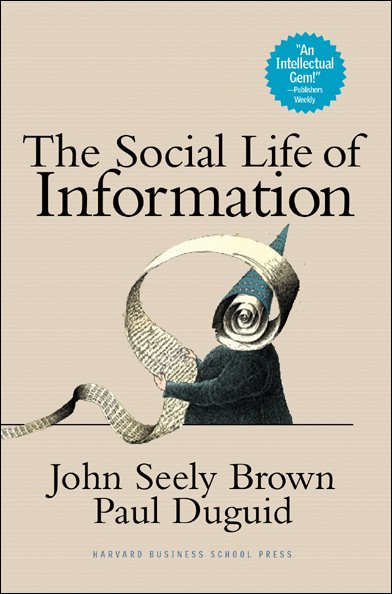
Thanks to Bruce Landon's Weblog for Students for a link to a very interesting article re: the impact of computer-mediated communication (the internet) on the dynamics of the "invisible universities of scholars."
I know that the internet/web has greatly expanded the connections I've recently created and maintained with a broader array of researchers. Interesting reading for those who are interested in the Social Life of Information (this is a great book to read) in scholarly communities.
The nose knows - article on Go domain
Over on the Brain Blog is a summary of a recent article dealing with an aspect of the broad CHC domain of Go (olfactory abilities).
Technorati tags: neuropsychology. CHC theory. psychology. intelligence. intelligence theory. brain. neuroscience. olfactory. Go.
Technorati tags: neuropsychology. CHC theory. psychology. intelligence. intelligence theory. brain. neuroscience. olfactory. Go.
Thursday, December 22, 2005
Size matters? More on brain size and IQ

Another research study suggesting that "bigger is better" when it comes to brain size. This studyis unique as it is based on brain autopsies.
Intelligence scholars have had a long-standing interest in this research. I've never paid much attention as I don't see much in the way of practical implications...assessment psychologists are NOT going to start measuring the heads of clients.!!!!!!!! The correlations (proportion of IQ variance explained) is of theoretical/statistical significance, but has little practical significance. But....it is interesting cocktail converstation material.
I find it personally interesting given that my brother (and his friends) used to tease me about the size of my head when I was a kid (they thought mine was too big). Now I have ammunition to fight back!!
I just ran a search of my private reference database. All of the records below make some kind of mention of "brain size" in the article...for those who want to know more...happy reading:)
Brain size references
- Bakalar, P. (2004). The IQ of gypsies in central Europe. Mankind Quarterly, 44(3-4), 291-300.
- Colom, R., & GarciaLopez, O. (2002). Sex differences in fluid intelligence among high school graduates. Personality and Individual Differences, 32(3), 445-451.
- Colom, R., JuanEspinosa, M., Abad, F., & Garcia, L. F. (2000). Negligible sex differences in general intelligence. Intelligence, 28(1), 57-68.
- Colom, R., & Lynn, R. (2004). Testing the developmental theory of sex differences in intelligence on 12-18 year olds. Personality and Individual Differences, 36(1), 75-82.
- Deary, I. J. (2001). Individual differences in cognition: British contributions over a century. British Journal of Psychology, 92, 217-237.
- Garlick, D. (2002). Understanding the nature of the general factor of intelligence: The role of individual differences in neural plasticity as an explanatory mechanism. Psychological Review, 109(1), 116-136.
- Haier, R. J., Chueh, D., Touchette, P., Lott, I. et al. (1995). Brain size and cerebral glucose metabolic rate in nonspecific mental retardation and Down syndrome. Intelligence, 20(2), 191-210.
- Jensen, A. R. (2002). Galton's legacy to research on intelligence. Journal of Biosocial Science, 34(2), 145-172.
- Lubinski, D. (2000). Scientific and social significance of assessing individual differences: ''Sinking shafts at a few critical points''. Annual Review of Psychology, 51, 405-444.
- Lynn, R., Allik, J., & Irwing, P. (2004). Sex differences on three factors identified in Raven's Standard Progressive Matrices. Intelligence, 32(4), 411-424.
- Lynn, R., Allik, J., & Must, O. (2000). Sex differences in brain size, stature and intelligence in children and adolescents: some evidence from Estonia. Personality and Individual Differences, 29(3), 555-560.
- Lynn, R., & Irwing, P. (2004). Sex differences on the progressive matrices: A meta-analysis. Intelligence, 32(5), 481-498.
- Moutafi, J., Furnham, A., & Paltiel, L. (2005). Can personality factors predict intelligence? Personality and Individual Differences, 38(5), 1021-1033.
- Neubauer, A. C., & Fink, A. (2003). Fluid intelligence and neural efficiency: effects of task complexity and sex. Personality and Individual Differences, 35(4), 811-827.
- Rushton, J. P. (2004). Placing intelligence into an evolutionary framework or how g fits into the r-K matrix of life-history traits including longevity. Intelligence, 32(4), 321-328.
- Rushton, J. P. (1991). "Mongoloid^Caucasoid differences in brain size from military sample": Reply. Intelligence, 15(3), 365-367.
- Rushton, J. P. (1991). Mongoloid^Caucasoid differences in brain size from military samples. Intelligence, 15(3), 351-359.
- Rushton, J. P. (1997). Cranial size and IQ in Asian Americans from birth to age seven. Intelligence, 25(1), 7-20.
- Templer, D. I., & Tomeo, M. E. (2002). Mean Graduate Record Examination (GRE) score and gender distribution as function of academic discipline. Personality and Individual Differences, 32(1), 175-179.
- Voracek, M. (2004). National intelligence and suicide rate: an ecological study of 85 countries. Personality and Individual Differences, 37(3), 543-553.
- Willerman, L. (1991). "Mongoloid-Caucasoid differences in brain size from military samples": Commentary. Intelligence, 15(3), 361-364.
- Willerman, L., Schultz, R., Rutledge, J. N., & Bigler, E. D. (1991). In vivo brain size and intelligence. Intelligence, 15(2), 223-228.
- Willerman, L., & Schultz, R. T. (1995). Comments on "Brain size and cerebral glucose metabolic rate in nonspecific mental retardation and Down syndrome.". Intelligence, 20(2), 211-216.
Technorati tags: psychology. intelligence. cognition. intelligence theory. brain. neuroscience.
Recent literature of interest 12-22-05 posted
This weeks "recent literature" of interest can be viewed/downloaded by clicking here.
Technorati tags: teaching tool. psychology.
Technorati tags: teaching tool. psychology.
More on mental time-keeping
Yet another research outpost checks in with a research report suggesting that mental time keeping (temporal tracking) may be an important cognitive variable to understand and possibly assess. See my prior musings re: the intriguing recent research on mental time-keeping models and synchronized metronome tapping measurement and intervention.
The current BPS post suggests a link between accuracy of mental time-keeping and a predisposition to boredom.
Interesting stuff.
Technorati tags: psychology. intelligence. cognition. interactive metronome. mental time keeping. temporal tracking. working memory.
The current BPS post suggests a link between accuracy of mental time-keeping and a predisposition to boredom.
Interesting stuff.
Technorati tags: psychology. intelligence. cognition. interactive metronome. mental time keeping. temporal tracking. working memory.
Wednesday, December 21, 2005
CHC listserv close to 800
Yipppeeeeee. The CHC listserv membership is now at 798!!!!! Only two more and we will be at 800 and counting!!!! A goal for this next year is to get it over the 1000 mark.
As encouragement, any NASP members who can prove to me (in person at NASP) that they have contributed to the enrollment of mucho members between now and next NASP in March will be awarded a free CHC listserv shirt (designed by Dr. Joe). I'm bringing 4-5 extras to NASP and plan to give them away at the informal CHC listserv that has been mentioned.
Long live the CHC listerv!!!!!!!!!!!!!
As encouragement, any NASP members who can prove to me (in person at NASP) that they have contributed to the enrollment of mucho members between now and next NASP in March will be awarded a free CHC listserv shirt (designed by Dr. Joe). I'm bringing 4-5 extras to NASP and plan to give them away at the informal CHC listserv that has been mentioned.
Long live the CHC listerv!!!!!!!!!!!!!
Multi-tasking and working memory during driving
Interesting post over at Cognitive Dailey Blog re: decrement in car driving performance as greater demands are placed on working memory (and multi-tasking) as a function of the difficulty of the conversation in the car. Food for thought.
Technorati tags: psychology. intelligence. cognition. working memory.
Technorati tags: psychology. intelligence. cognition. working memory.
Off task - Top Google searches for 2005
Interesting post from Google regarding the hot topic Google searches this past year. I'll refrain from making any editorial comments re: any potential meaning about what is important in our culture. Some interesting hit graphs re: news events can be viewed by clicking on the tabs.
Tuesday, December 20, 2005
Visual Imagery (Gv-IM) and diagramming
Another nice post on the Eide Neurolearning Blog re: use of diagramming as a Gv-Imagery (Gv-IM). As per usual, the ENB also provides a link to the original article for those who want to read the original source. Thanks ENB
Technorati tags: CHC theory. psychology. intelligence. visual spatial. Gv.
Technorati tags: CHC theory. psychology. intelligence. visual spatial. Gv.
Subscribe to:
Posts (Atom)